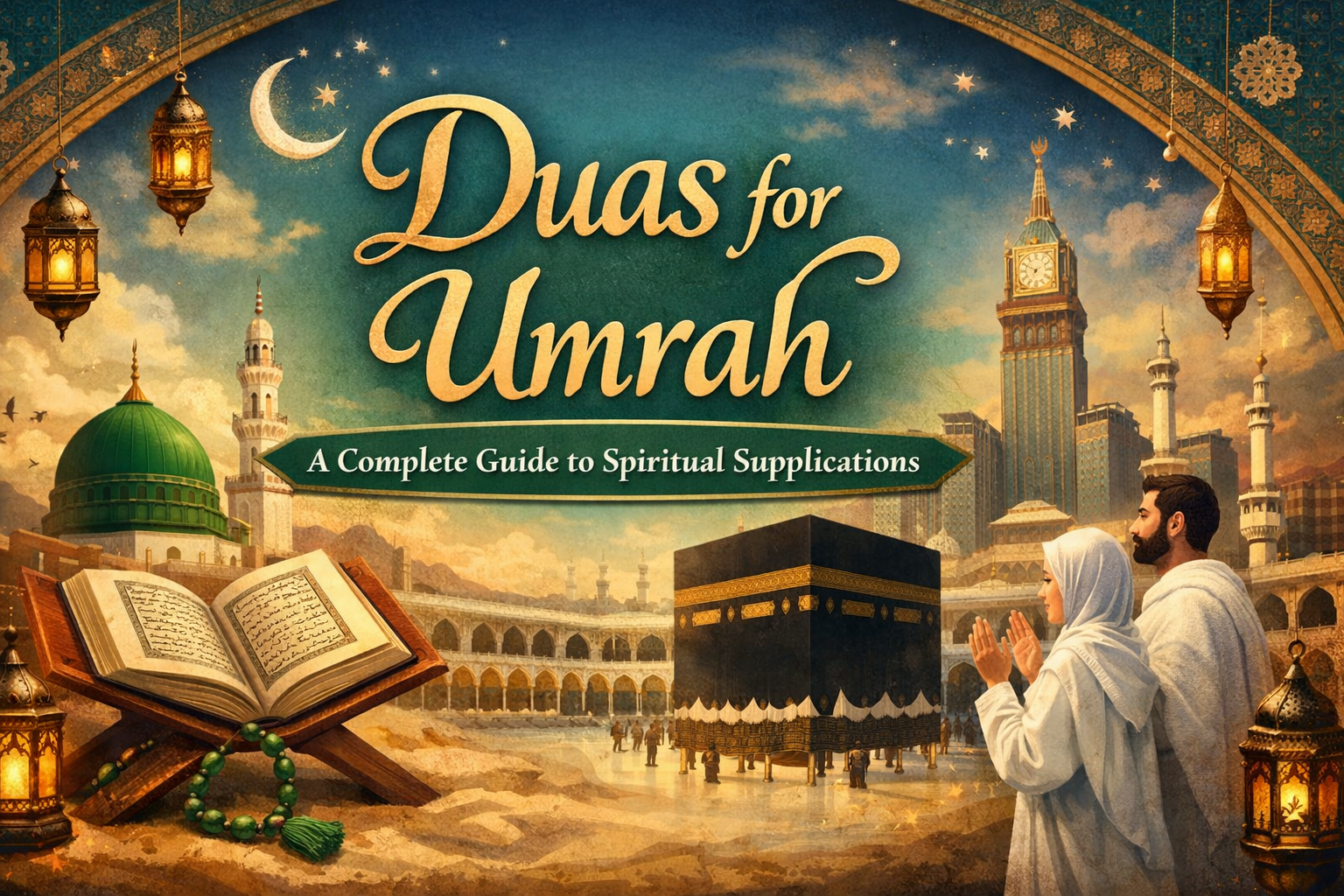
Du‘as for Umrah, such as when entering Ihram, performing Tawaf, completing Sa‘ee, or leaving Masjid al-Haram, include recommended supplications from the Qur’an and Sunnah. While certain du‘as are reported in authentic hadith, there is no strict requirement to recite only specific words. Pilgrims may also make personal supplications from the heart. The essence of du‘a during Umrah lies in sincerity, humility, and complete reliance upon Allah.
Preparing for Umrah (11 Duas for Umrah You Must Know)
Performing Umrah is one of the most sacred journeys a Muslim can undertake. Along this journey, making du’as (supplications) at every step enriches the experience, strengthens faith, and opens the heart to Allah’s mercy. Whether you are going for the first time or have performed Umrah before, it is important to know some recommended du’as and to recite the step by step umrah dua.
While some pilgrims rely on booklets or apps to recite specific du’as, it is important to understand that there are no strict, prescribed du’as for each step. You may recite any du’a from the Qur’an, Sunnah, or even your own personal prayers for yourself, your family, and the wider Muslim Ummah. There is no fixed or mandatory number or list of duas for umrah. Still, there are about 10-12 key moments in the pilgrimage where specific supplications are recommended, such as during Tawaf, Sa’ee, and upon seeing the Kaaba.
- Du’a for Travelling (Du’a al-Safar)
- Du’a When Boarding a Vehicle or Mounting
- Dua for Entering Ihram
- Reciting the Talbiyah
- Du’a Upon Entry into Masjid Al-Haram
- Du’as for Reverence and Awe (First Sight of the Kaaba)
- Du’as During Tawaf
- Du’a After Tawaf for Drinking Zamzam Water
- Du’a During Sa’ee
- Du’a to Recite at the Tops of Safa and Marwah
- Du’a for Departure (Leaving Masjid Al-Haram)
Spiritual Preparation Before Departure
Before leaving home for Makkah, a pilgrim should seek Allah’s protection, guidance, and blessings through the umrah dua. Mental preparation and a sense of readiness are also important, which can be supported by choosing suitable Umrah packages. After that, you can recite the recommended du’as such as dua for umrah niyat and dua before starting the journey. The Prophet ﷺ emphasized the importance of beginning journeys with du’a to safeguard oneself from harm and misfortune.
- Du’a for Travelling (Du’a al-Safar):
بسم الله توكلت على الله، ولا حول ولا قوة إلا بالله
Bismillah, tawakkaltu ‘alallah, wa la hawla wa la quwwata illa billah.
“I begin with the Name of Allah; I trust in Allah; there is no altering of conditions except by the Power of Allah.”
(Riyad as-Salihin 83)
Reciting this du’a ensures that your journey begins with faith, placing your trust entirely in Allah, and keeping the devil at bay.
- Du’a When Boarding a Vehicle or Mounting
When mounting a car, bus, or camel, the Prophet ﷺ would say:
اَللهُ أَكْبَرُ … وَسُوْءِ الْمُنْقَلَبِ فِي الْمَالِ وَالْأَهْلِ
Allāhu akbar, subḥāna-l-ladhī sakkhara lanā hādhā…
“Allah is the Greatest. O Allah, make this journey easy for us, protect our wealth and family, and guide us to righteousness.”
(Sahih Muslim 1342)
This du’a highlights that Umrah is not just about reaching Makkah but about seeking Allah’s protection and guidance along the way.
Entering Ihram with Intention and Talbiyah
Before entering Ihram, it’s important to prepare both physically and spiritually. Ensure that you have performed Ghusl (full ablution), trimmed your nails, and removed unwanted hair, as part of the Sunnah practices. Men should wear the two-piece white Ihram garments, while women wear modest, loose-fitting clothing covering the entire body except the face and hands.
- Dua for Entering Ihram
Once you enter the sacred state of Ihram, you should make a clear intention (niyyah) for Umrah. The Prophet ﷺ recommended performing two rak’ahs of Sunnah prayer first, then making this du’a:
اللَّهُمَّ إِنِّي أُرِيْدُ الْعُمْرَةَ فَيَسِّرْهَا لِي وَتَقَبَّلْهَا مِنِّي
Allahumma innee uridul umrah; fayassir haa li wa taqabbalahaa minnee.
“O Allah! I intend to perform Umrah. Make it easy for me and accept it from me.”
(Sahih Bukhari)
This shows your full submission to Allah and your hope for His acceptance.
- Reciting the Talbiyah
The Talbiyah is a proclamation of readiness and devotion to Allah, recited repeatedly throughout the journey:
لَبَّيْكَ اللهُمَّ لَبَّيْكَ … لا شريك لك
Labbayka Allahumma Labbayk. Labbayka La Sharika Laka Labbayk…
“Here I am at Your service, O Allah, here I am. Truly all praise and blessings belong to You, and You have no partner.” (Sahih Muslim 1184a)
Men should recite it audibly, while women may recite it quietly. This constant remembrance elevates the spiritual atmosphere of the pilgrimage.
Entering Masjid Al-Haram
Entering Masjid Al-Haram is a deeply spiritual moment, symbolizing closeness to Allah. Pilgrims should leave worldly concerns behind and maintain respect for others around them. Performing wudu before entry and placing the right foot first follows the Sunnah and prepares the heart for worship.
4. Du’a Upon Entry
As you step into the Masjid Al-Haram, place your right foot first and recite:
بسم الله والحمد لله والصلاة على رسول الله …
Bismillahi wal hamdulillahi wassalatu a’laa Rasulillah…
“I begin in the name of Allah, all praise be to Him, and blessings be upon the Prophet ﷺ. O Allah, forgive my sins and open for me the gates of Your mercy.”
(Tirmidhi)
This du’a reminds you that entering the Masjid is a privilege, a chance to seek forgiveness, and an opportunity to connect deeply with Allah.
First Sight of the Kaaba
Seeing the Kaaba for the first time is a moment of awe and deep spiritual reflection. It reminds pilgrims of Allah’s greatness and the unity of Muslims around the world. Maintaining humility and focus at this moment prepares the heart for worship and sincere supplication.
- Du’as for Reverence and Awe
When seeing the Kaaba for the first time, the Prophet ﷺ recited:
اَللَّهُمَّ زِدْ هَذَا الْبَيْتَ تَشْرِيفاً وَتَعْظِيماً
Allahumma zid hadha l-bayta tashrifan wa ta’dhiman…
“O Allah, increase this House in honour, esteem, reverence, and awe, and bless those who honour it.”
Another du’a of peace and submission:
اَللَّهُمَّ أَنْتَ السَّلاَمُ وَمِنْكَ السَّلَامُ
Allahumma anta s-salamu wa minka s-salamu…
“O Allah, You are Peace, and from You is peace. Grant us life in the Abode of Peace.”
These du’as set a tone of humility and spiritual focus for the rituals to follow.
Tawaf (Circling the Kaaba)
Tawaf is a sacred act of worship, symbolizing unity, devotion, and closeness to Allah. As you circle the Kaaba, it is important to move with mindfulness and humility, reflecting on your intentions and seeking Allah’s mercy.
- Du’as During Tawaf
Tawaf consists of seven circuits around the Kaaba. Begin each round facing the Black Stone (Hajar al-Aswad) and recite:
بسم الله الله أكبر ولله الحمد
Bismillahi Allahu Akbar wa lillahil hamd.
“I start in the name of Allah, Allah is the Greatest, and all praise belongs to Him.”
- Du’as to Recite Between the Yemeni Corner and the Black Stone
While circling, you can recite:
رَبَّنَا آتِنَا فِي الدُّنْيَا حَسَنَةً وَفِي الآخِرَةِ حَسَنَةً وَقِنَا عَذَابَ النَّار
Rabbanaa aatinaa fiddunya hasanah wa fil akhirati hasanah…
“O Lord, grant us good in this life and the hereafter, and save us from the punishment of the fire.” (Sunan Abi Dawud 1892)
You may also recite any Qur’anic verses, personal prayers, or dhikr while performing Tawaf. The key is to maintain focus, humility, and heartfelt devotion.
- Dua After Tawaf for Drinking Zamzam water
Pray two brief rak’ahs behind Maqam Ibrahim, then drink Zamzam water, making this du’a:
اللَّهُمَّ إِنِّي أَسْأَلُكَ عِلْمًا نَافِعًا وَرِزْقًا وَاسِعًا وَشِفَاءً مِنْ كُلِّ دَاءٍ
Allahumma innee as’aluka ilman na’fiaa, wa rizqa’w wa-si’aa…
“O Allah, I ask You for beneficial knowledge, ample provision, and healing from all ailments.”
(Hisn al-Muslim)
Sa’ee (Walking Between Safa and Marwah)
Sa’ee is a ritual that commemorates Hajar’s devotion and trust in Allah.
- Du’a During Sa’ee
Sa’ee involves walking seven times between the hills of Safa and Marwah. At the start of Safa, recite:
إِنَّ ٱلصَّفَا وَٱلْمَرْوَةَ مِن شَعَائِرِ اللّهِ …
Innassafaa wal marwata min sha’airillah…
“Indeed, Safa and Marwah are among the symbols of Allah. Whoever performs Umrah may walk between them without sin, and Allah rewards those who do good willingly.”
(Surah Al-Baqarah 2:158)
- Du’a to Recite at the Tops of Safa and Marwah
At the top of Safa and Marwah, recite:
اَللّٰهُ أَكْبَرُ … وَهَزَمَ الْأَحْزَابَ وَحْدَهُ
Allahu Akbar, La illaha illAllahu wahdahu…
“Allah is the Greatest. There is none worthy of worship except Allah alone, without partner. He has fulfilled His promise, helped His servant, and defeated the confederates.”
(Hisn al-Muslim 236)
This reaffirmation of Tawheed reminds pilgrims of Allah’s absolute power and mercy.
Leaving Masjid Al-Haram
Leaving Masjid Al-Haram is a moment to reflect on the blessings and spiritual growth gained during Umrah.
- Du’a for Departure
After completing Umrah, as you leave the Masjid Al-Haram, recite:
بِسْمِ اللّهِ وَالصَّلاَةُ وَالسَّلاَمُ عَلَى رَسُولِ اللّهِ …
Bismillah — wassalatu wassalamu ala Rasoolillah…
“In the name of Allah, and prayers and peace be upon the Messenger of Allah. O Allah, I ask You for Your favour.”
This expresses gratitude and a hopeful heart for Allah’s continued blessings. Many pilgrims find that booking with trusted providers like Alkareem Travel ensures a smooth departure and continued spiritual focus until returning home.
Tips for Making Duas During Umrah
Making duas during Umrah is most effective when done with sincerity, humility, and focus. Speak from the heart, use your own words alongside the recommended supplications, and maintain presence of mind in every ritual.
- Understand What You Say: Focus on the meanings of your du’as, not just pronunciation. Understanding strengthens your spiritual connection.
- Include Others: Make du’a for family, friends, and the Muslim Ummah. The Prophet ﷺ encouraged this sharing of blessings.
- Use Resources Wisely: Apps or dua booklets can help you remember du’as, especially if you wish to recite them accurately or with translation.