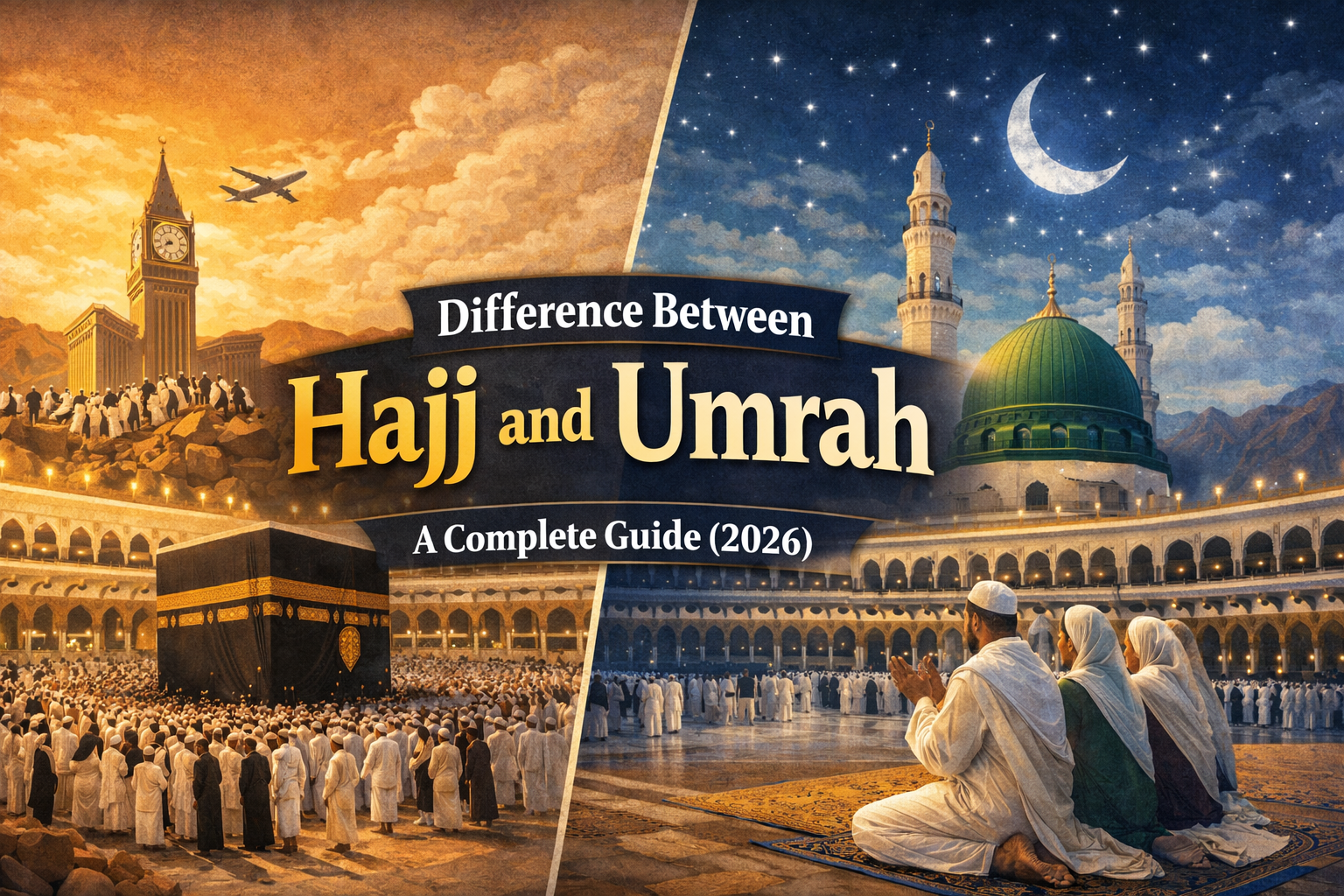
Hajj and Umrah are two sacred pilgrimages in Islam that share common rituals but differ greatly in obligation, timing, and spiritual weight. While Hajj is a mandatory pillar of Islam performed on fixed days in Dhul Hijjah, Umrah is a voluntary act of worship that can be performed almost any time of the year. Many Muslims plan this journey through well-organized Umrah Packages that help them focus more on worship and less on travel arrangements. Understanding the difference between Hajj and Umrah helps Muslims recognize their distinct purposes, requirements, rewards, and roles in strengthening faith and fulfilling religious duty.
What is Hajj?
Hajj is the major pilgrimage and the fifth pillar of Islam. It is an obligation for every Muslim who is physically, financially, and mentally able. Hajj takes place only once a year. It is performed in the month of Dhul Hijjah. Millions of Muslims gather in Makkah during these days. Allah commands Hajj in the Quran. It is not optional like Umrah. Completing Hajj is a lifetime achievement and a core part of the Islamic faith.
What is Umrah?
Umrah is known as the minor pilgrimage. It is a beautiful act of worship performed in Makkah. Muslims travel to the Kaaba and complete specific rituals to seek Allah’s mercy and forgiveness. Umrah is not compulsory, but it is highly recommended. It helps refresh faith and brings peace to the heart. Many Muslims prefer performing Umrah during blessed times of the year, and Ramadan Umrah Packages are especially popular because worship in this month carries multiplied rewards. The Prophet Muhammad ﷺ performed Umrah four times. This shows its importance, even though it is not mandatory.
What are the Main Differences Between Hajj and Umrah
The table below clearly explains how Hajj and Umrah differ in obligation, time, rituals, and effort. This makes it easier to understand which pilgrimage is mandatory and which is optional.
| Aspect | Hajj | Umrah |
| Obligation | Mandatory (Fard) | Optional (Sunnah) |
| Pillar of Islam | Yes | No |
| Time | Fixed days in Dhul Hijjah | Anytime except Hajj days |
| Duration | 5–6 days | A few hours |
| Rituals | Many and Detailed | Few and simple |
| Arafat Stay | Required | Not Required |
| Physical Effort | Required | Not Required |
| Crowd Level | High | Moderate |
| Frequency | Once in a Lifetime | Can be done many times |
Hajj is a compulsory duty and can only be performed at a specific time. Umrah is optional and flexible in timing. Both bring great reward, but Hajj holds a higher obligation in Islam.
9 Differences between Hajj and Umrah
Although Hajj and Umrah share some rituals, they differ greatly in obligation, timing, and effort. The points below explain these differences clearly.
Obligation
Hajj is mandatory for every Muslim who has the means. It must be performed at least once in a lifetime. Umrah is optional and can be performed by choice.
Pillar of Islam
Hajj is the fifth pillar of Islam. This makes it a core part of faith. Umrah is not a pillar and does not carry the same obligation.
Time
Hajj can only be performed on fixed days in Dhul Hijjah. Umrah can be performed at almost any time of the year, except during the days of Hajj.
Duration
Hajj takes around five to six days to complete. Umrah is much shorter and usually finishes within a few hours.
Rituals
Hajj includes many detailed rituals. These rituals take place at different locations. Umrah has fewer rituals and is simpler to perform.
Arafat Stay
Staying at Arafat is a key part of Hajj. Without it, Hajj is not valid. Umrah does not include any stay at Arafat.
Physical Effort
Hajj requires strong physical endurance. Long walks and crowded conditions are common. Umrah requires less effort and is easier for most people.
Crowd Level
The Hajj season is extremely crowded. Millions of pilgrims gather at the same time. Umrah is usually less crowded, especially outside peak seasons.
Frequency
Hajj is required only once in a lifetime if a person is able. Umrah can be performed many times without any restriction.
What are the Similarities Between Hajj and Umrah?
The similarities between Hajj and Umrah include: both journeys are performed in Makkah, and both require entering into the state of Ihram. Tawaf and Sa’i are essential parts of both pilgrimages. The main goal of both is to seek Allah’s pleasure. They help cleanse sins, strengthen faith, and were both practiced by the Prophet Muhammad ﷺ.
How Many Umrah Is Equal to One Hajj?
No fixed number of Umrahs equals one obligatory Hajj. Even if a person performs many Umrahs, Hajj remains compulsory. However, one Umrah performed in Ramadan carries the reward of a Hajj. This reward is equal in blessing, not in obligation. It does not replace the duty of performing Hajj.
Which Umrah Is Equal to Hajj?
The Umrah performed during the month of Ramadan has the reward equal to Hajj. This is mentioned in an authentic Hadith. It is important to understand that this refers to reward only. It does not remove the obligation of Hajj. A Muslim must still perform Hajj once in their lifetime if they are able.
Why Is Hajj More Important Than Umrah?
Hajj is one of the five pillars of Islam. This alone gives it higher importance. Umrah is Sunnah and voluntary. Hajj is commanded directly by Allah in the Quran. It includes unique rituals like standing at Arafat, which do not exist in Umrah. Because of its obligation and depth, Hajj holds a higher status in Islam.
Is Hajj More Difficult Than Umrah?
Yes, Hajj is harder. It involves more rituals and more days. Crowds are much larger during the Hajj season. Pilgrims stay in tents in Mina. They sleep outdoors in Muzdalifah. Physical strength and patience are required.
Can Umrah Replace Hajj?
No, Umrah cannot replace Hajj. Even if someone performs many Umrahs, Hajj is still required. Hajj is a pillar of Islam. Umrah is not.
Is There a Limit on Umrah?
There is no Islamic limit on Umrah. A person can perform it multiple times.