For many Muslims, visiting Al-Madinah Al-Munawwarah (The Enlightened City) is one of the most emotional and spiritually uplifting parts of an Umrah journey. Although visiting Madinah is not a compulsory part of Umrah, millions of pilgrims choose to spend several days there to pray in Masjid an-Nabawi, visit important Islamic landmarks, and reflect on the life of Prophet Muhammad ﷺ.
Unlike Makkah, where the focus is on performing the rites of Umrah, Madinah offers a peaceful atmosphere that allows pilgrims to deepen their understanding of Islamic history and strengthen their connection with Allah (SWT).
This guide covers the most important places to visit in Madinah, the etiquette of Ziyarat, practical travel tips, and common questions from UK pilgrims.
What is Ziyarat?
The word Ziyarat means “to visit.” In the context of Umrah and Hajj, it refers to visiting places that hold historical and religious significance in Islam.
Many pilgrims visit sites connected with:
- Prophet Muhammad ﷺ
- His family
- His companions (Sahabah)
- Important events in Islamic history
The purpose of Ziyarat is to remember Islamic history, reflect on the sacrifices made for Islam, increase gratitude to Allah, and strengthen one’s faith.
It is important to remember that these visits are acts of remembrance and reflection—not acts of worship directed towards the sites themselves.
Is Visiting Madinah Part of Umrah?
No. Your Umrah is complete without visiting Madinah.
However, because of the immense virtue of praying in Masjid an-Nabawi and visiting the Prophet’s ﷺ Mosque, many pilgrims include Madinah in their travel itinerary.
For most UK Umrah packages, visits to both Makkah and Madinah are included.
What is the Best Time to Visit Madinah?
Madinah welcomes pilgrims throughout the year. Many UK pilgrims prefer:
- October to February for cooler weather
- After completing Umrah in Makkah
- Outside peak holiday seasons for fewer crowds
Early mornings and evenings are often the most comfortable times for Ziyarat due to lower temperatures.
Important Places to Visit in Madinah
The important places to visit in Madinah include:
1. Masjid an-Nabawi (The Prophet’s Mosque)
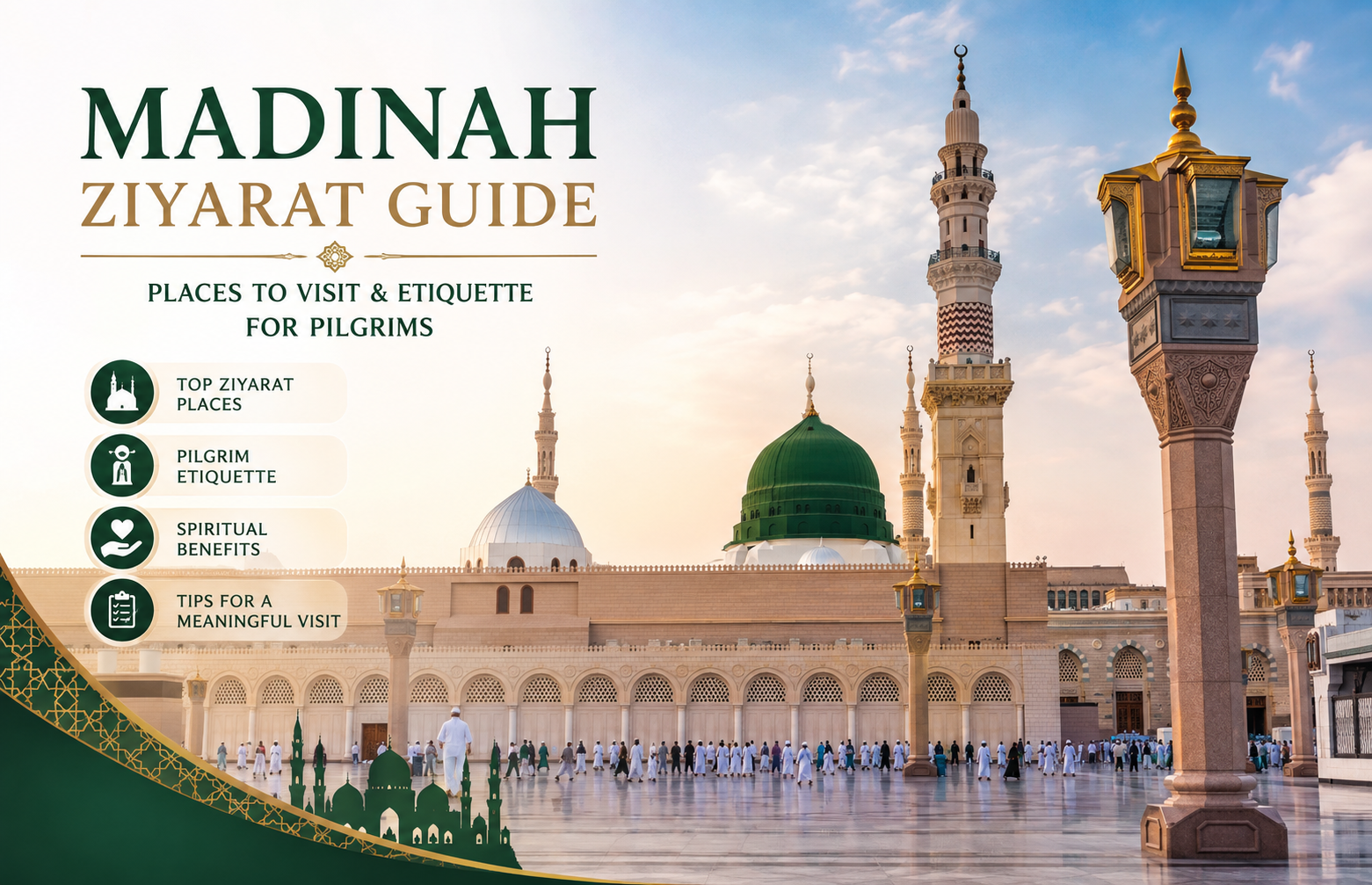
No visit to Madinah is complete without praying in Masjid an-Nabawi, the second holiest mosque in Islam after Masjid al-Haram.
Originally built by Prophet Muhammad ﷺ after his migration (Hijrah) from Makkah, the mosque has expanded significantly over the centuries while remaining one of the most sacred places in the Islamic world.
Highlights
- The Green Dome
- Beautiful courtyards
- Retractable umbrellas
- Peaceful atmosphere
- Thousands of worshippers from around the world
Pilgrims often spend several days praying here because each prayer carries immense spiritual reward.
2. Rawdah (Riyad ul-Jannah)
Rawdah is one of the most beloved places inside Masjid an-Nabawi.
It is the area between the Prophet’s ﷺ house and his pulpit (Minbar). The Prophet ﷺ described it as “a garden from the gardens of Paradise.”
Because visitor numbers are carefully managed, pilgrims generally need to book an appointment through the Nusuk app before visiting.
When entering Rawdah:
- Pray with humility.
- Avoid rushing.
- Follow staff instructions.
- Respect allocated timings.
3. The Prophet’s ﷺ Grave
Adjacent to Rawdah lies the resting place of:
- Prophet Muhammad ﷺ
- Abu Bakr As-Siddiq (RA)
- Umar ibn Al-Khattab (RA)
Pilgrims offer Salam (greetings of peace) respectfully while remembering the teachings of Islam. Visitors should avoid pushing, shouting, or causing inconvenience to others.
4. Jannat al-Baqi
Located beside Masjid an-Nabawi, Jannat al-Baqi is the oldest Islamic cemetery in Madinah.
Many members of the Prophet’s ﷺ family, companions, and early Muslims are buried here.
Pilgrims visit to:
- Reflect on the Hereafter
- Make dua for the deceased
- Remember the sacrifices of the early Muslims
Photography and loud conversations should be avoided.
5. Masjid Quba
Masjid Quba holds the distinction of being the first mosque built in Islam. The Prophet ﷺ regularly visited this mosque and encouraged Muslims to pray there. Many pilgrims travel to Masjid Quba after arriving in Madinah.
The peaceful surroundings make it one of the most rewarding Ziyarat locations.
6. Masjid Qiblatain
Masjid Qiblatain is famous because it commemorates the moment when the Qiblah changed from Jerusalem to the Kaaba in Makkah during prayer.
The mosque symbolises an important turning point in Islamic history. Many guided Ziyarat tours include this stop.
7. Mount Uhud
Mount Uhud is one of the most significant historical sites in Islam. It was the location of the famous Battle of Uhud, where many companions were martyred. The Prophet ﷺ expressed his love for Mount Uhud, saying that it loves us and we love it.
Visitors often reflect upon:
- Patience
- Sacrifice
- Obedience
- Faith during hardship
8. Martyrs of Uhud Cemetery
Near Mount Uhud lies the resting place of many companions who lost their lives during the Battle of Uhud. Among them is Hamza ibn Abdul Muttalib (RA), the beloved uncle of the Prophet ﷺ. Pilgrims visit respectfully and make dua for the deceased.
9. The Seven Mosques (Sab’ah Masajid)
This collection of small historic mosques is associated with the Battle of the Trench (Ghazwat al-Khandaq).
Although many structures have changed over time, the area remains an important historical landmark visited by pilgrims
Recommended Madinah Ziyarat Itinerary
If you’re spending two or three days in Madinah, a simple itinerary could be:
Day 1
- Masjid an-Nabawi
- Rawdah (if booked)
- Prophet’s ﷺ Grave
- Jannat al-Baqi
Day 2
- Masjid Quba
- Masjid Qiblatain
- Mount Uhud
- Uhud Martyrs Cemetery
Day 3 (Optional)
- Seven Mosques
- Local Islamic museums (if available)
- Shopping for gifts and dates
- Additional prayers at Masjid an-Nabawi
This allows you to explore Madinah without rushing.
What is the Etiquette of Ziyarat?
Respecting Islamic manners during Ziyarat is just as important as visiting the sites themselves.
Have the Right Intention
Visit these places to remember Islamic history, increase your faith, and seek closeness to Allah (SWT). Avoid believing that the places themselves possess independent powers or blessings.
Dress Modestly
Wear clean, modest Islamic clothing. Women should observe proper hijab, while men should also dress respectfully.
Speak Quietly
Keep conversations calm and respectful. Many pilgrims are praying, reading Qur’an, or making dua.
Avoid Crowding
Do not push or rush, especially near Rawdah or the Prophet’s ﷺ resting place. Be patient and considerate of fellow pilgrims.
Respect Photography Rules
Some areas prohibit photography. Even where permitted, avoid taking excessive selfies or disturbing others. Remember that these are sacred places, not tourist attractions.
Keep the Environment Clean
Dispose of litter properly. Help preserve the cleanliness of the holy city.
Follow Staff Instructions
Security staff and volunteers are there to ensure the safety and comfort of all pilgrims. Always cooperate with their guidance.
Practical Tips for UK Pilgrims
To make your Ziyarat experience more comfortable:
- Wear comfortable walking shoes.
- Carry a reusable water bottle.
- Use sunscreen during warmer months.
- Keep your phone charged.
- Download the Nusuk app before travelling.
- Carry your hotel card in case you become separated.
- Travel with your group where possible.
Common Mistakes to Avoid as First-Time Pilgrims
Many first-time pilgrims unintentionally make mistakes during Ziyarat.
Avoid:
- Treating historical sites like tourist attractions.
- Speaking loudly inside mosques.
- Pushing through crowds.
- Ignoring official instructions.
- Leaving litter behind.
- Visiting without learning the historical significance of the sites.
Taking time to understand each location beforehand makes the experience more meaningful. You can also read up on the local customs and traditions to show respect. Plus the Umrah complete guide can also help you prepare better for your journey.
Final Thoughts
Madinah is a city unlike any other. From the peaceful atmosphere of Masjid an-Nabawi to the historical significance of Mount Uhud, Masjid Quba, and Jannat al-Baqi, every visit offers an opportunity to reflect on the life of Prophet Muhammad ﷺ and the remarkable sacrifices made by the early Muslims.
While Ziyarat is not part of the obligatory rites of Umrah, it enriches the pilgrimage by connecting visitors with the history, values, and legacy of Islam.
As you walk through the streets of Madinah, remember that the greatest benefit of Ziyarat lies not in simply visiting these places but in allowing their lessons to inspire greater faith, gratitude, patience, and devotion.
FAQS
Is Ziyarat compulsory?
No. Ziyarat is not an obligatory part of Umrah, but many pilgrims choose to visit important Islamic sites in Madinah to deepen their understanding of Islamic history.
Do I need Nusuk to visit Rawdah?
In most cases, appointments for Rawdah are managed through the Nusuk app. Check the latest Saudi guidance before travelling, as procedures may change.
Can women visit Rawdah?
Yes. Women can visit Rawdah, subject to the current appointment system and designated visiting times.
How many days should I stay in Madinah?
Most UK pilgrims spend 2–4 days in Madinah, although longer stays allow more time for worship and reflection.
Is there a dress code?
Yes. Both men and women should dress modestly and respectfully in accordance with Islamic etiquette.