
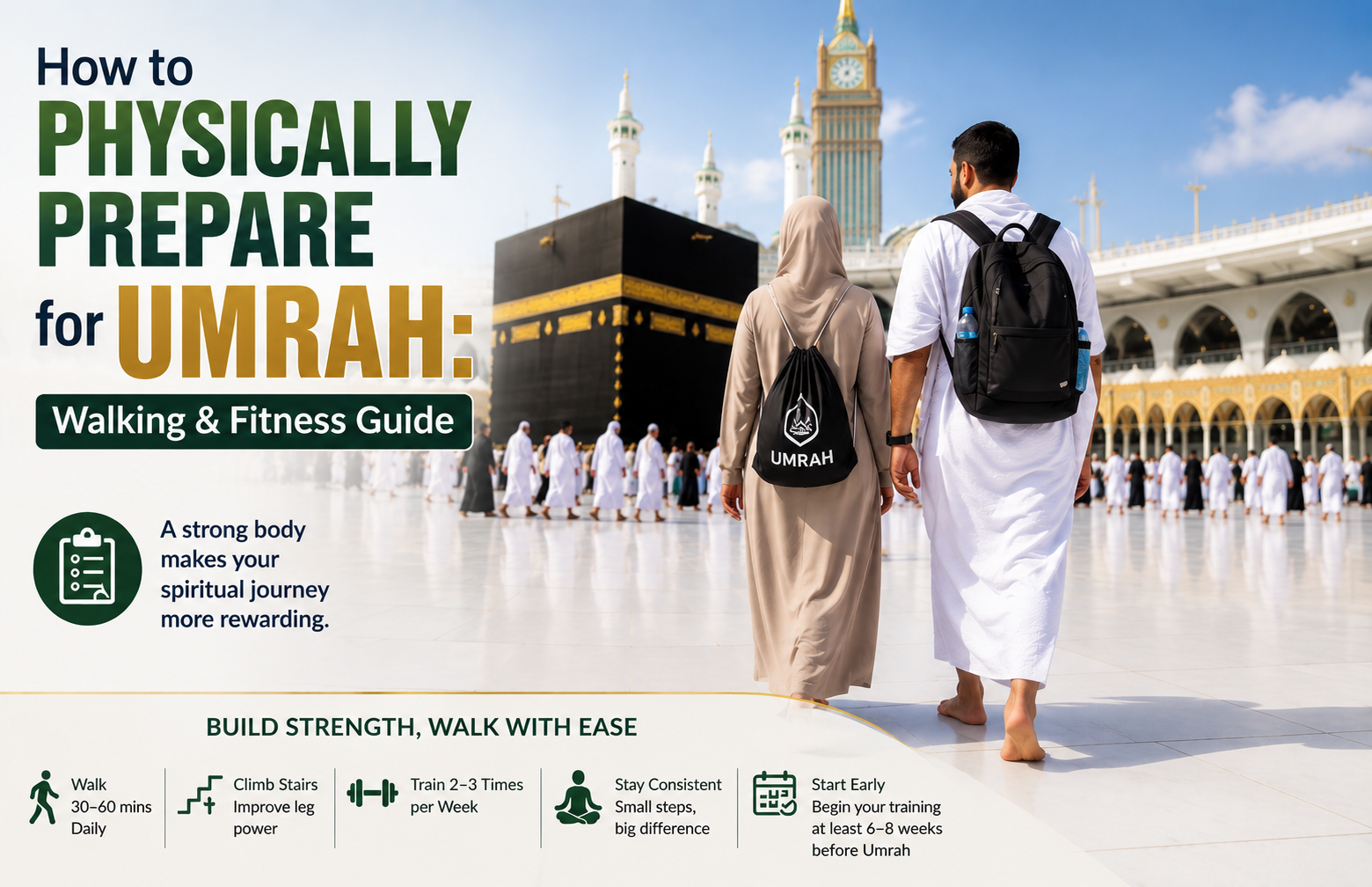
Umrah is a spiritual journey first but it’s also a physically demanding one. And it catches a lot of people off guard. You might be fit enough for daily life back home and still find yourself exhausted halfway through Tawaf. The heat, the crowds, and the sheer amount of walking add up fast, especially if you haven’t trained your body for it beforehand.
The good news is that a few months of simple, consistent preparation makes a real difference. You don’t need to become an athlete. You just need your legs, feet, and stamina ready for what’s actually coming.
How Much Walking are We Really Talking About?
It helps to know the numbers before you start training, since vague advice like “walk more” doesn’t tell you much on its own.
Sa’i, the walk between the hills of Safa and Marwah, has a fixed distance. Every single lap is roughly 394 metres, and with seven laps in total, that comes to about 2.76 kilometres. This part doesn’t change much regardless of crowd size, since the path is fixed.
Tawaf, the seven circuits around the Kaaba, varies more. If you’re walking close to the Kaaba on the ground floor with a lighter crowd, the full seven rounds might only add up to around 1 to 1.4 kilometres. During busy periods, or if you end up on an upper floor or the rooftop because the ground level is packed, that same ritual can stretch to 3 kilometres or more, since each circuit covers a wider radius.
Add these two together, along with walking to and from your hotel, moving around inside the Haram, and any Ziyarat trips to historical sites, and most pilgrims end up covering somewhere between 4 and 6 kilometres a day, sometimes more. Over a week or ten day trip, that adds up to serious cumulative distance, all while standing for long prayers and dealing with heat and crowds at the same time.
Start With Walking as Months Before You Travel
The single most useful thing you can do to prepare is simply walk more, consistently, starting a few months before your trip rather than a few weeks.
If you’re currently not very active, start small. A 15 to 20 minute walk most days is a reasonable starting point. Over the following weeks, gradually build that up toward 45 minutes to an hour of continuous walking, since this more closely matches the sustained movement you’ll be doing during Tawaf and Sa’i.
Try to include some walking on uneven or inclined ground if your hotel or route to the Haram involves any hills or stairs, since flat treadmill walking doesn’t fully prepare your legs for that kind of terrain. If you live somewhere with stairs, practising a few flights a day is a simple way to build the kind of leg strength you’ll actually use, especially if your hotel room isn’t on the ground floor and the lifts get busy.
Consistency matters more than intensity here. A month of daily 30 minute walks will prepare you far better than a single exhausting hike the week before you fly out.
Build General Stamina as Not Just Leg Strength
Walking is the main event, but general fitness helps with everything else too, from standing through long prayers to simply having enough energy left at the end of a long day to focus properly on your worship.
Light cardio, whether that’s walking, swimming, or cycling, a few times a week helps build the kind of stamina that keeps you going without feeling drained by mid afternoon. You don’t need intense workouts. The goal is steady, low impact activity that your heart and lungs can sustain for longer periods, not short bursts of high intensity effort.
If you’re able to, some basic strength work for your legs, like bodyweight squats or step ups, can help too, since strong legs handle repeated walking and standing far better than weak ones. This matters more for anyone with knee or hip concerns, since stronger muscles around those joints reduce strain during long days on your feet.
Don’t Underestimate Your Feet
Your feet take the brunt of Umrah, and foot problems are one of the most common things that quietly ruin a pilgrim’s trip. Blisters, sore arches, and swollen feet are avoidable with a bit of preparation.
Break in your shoes well before you travel. This sounds obvious, but a lot of pilgrims buy new sandals or trainers right before the trip and end up regretting it within the first day. Wear whatever you plan to walk in during your training walks over the weeks leading up to your trip, so your feet are already used to them.
Comfortable, well fitting footwear matters more than looks here. Many pilgrims prefer simple sandals for ease during ihram and wudu, while others prefer supportive trainers for long walking days. Whichever you choose, make sure they’ve already proven themselves comfortable over a genuine distance, not just a quick walk around the shop.
Pack a few blister plasters and a small foot care kit regardless of how confident you feel about your shoes, since even well broken in footwear can cause problems after several consecutive days of heavy walking in the heat.
Train for the Heat as Not Just the Distance
Saudi Arabia’s climate is a real factor, and it’s one that’s easy to underestimate if you’re training somewhere cooler. Walking 5 kilometres in mild UK weather feels completely different from walking the same distance in Makkah’s heat.
If your trip falls in a warmer month, try to do at least some of your training walks during the warmer part of the day back home, so your body has some experience managing exertion and heat together. This won’t fully replicate desert heat, but it helps more than training exclusively in cool, comfortable conditions.
Practice staying properly hydrated during your training walks too, rather than only thinking about it once you’re actually there. Getting into the habit of carrying water and drinking regularly, rather than waiting until you feel thirsty, is a habit worth building before you travel, not during your first hot day at the Haram.
Preparing Elderly Family Members
If you’re travelling with older parents or relatives, their preparation looks a bit different, and it’s worth having an honest conversation with them, and ideally their doctor, before the trip.
Shorter, more frequent walks tend to work better than trying to build up to long continuous distances. Even a daily 10 to 15 minute walk, done consistently, makes a genuine difference to stamina and joint mobility over a few months. Gentle stretching and mobility work can also help with the standing and movement involved in prayer and Tawaf.
It’s also worth discussing realistic expectations as a family. An elderly relative may need to use a wheelchair for parts of Tawaf, particularly during busier periods, and that is a completely normal and widely available option at the Haram, not something to feel uncomfortable about. Planning for this ahead of time, rather than discovering the need for it mid trip, makes the whole experience smoother for everyone.
Rest Matters as Much as Training
It’s easy to focus only on building up walking distance and forget that recovery is part of getting fit too. If you’re training several days a week, give your body at least one or two lighter days in between, rather than pushing hard every single day. Overdoing it in the weeks before your trip can leave you with sore joints or fatigue right when you need to be at your best, which defeats the purpose of preparing in the first place.
Sleep matters here too. Good sleep in the weeks leading up to your trip helps your body actually adapt to the walking and activity you’re building up, rather than just accumulating tiredness. This becomes even more important once you’re actually in Makkah or Madinah, where early prayers and late night worship can easily cut into rest if you’re not careful about pacing yourself across the whole trip rather than just the first day or two.
A Simple Preparation Timeline
Here’s a simple timeline to help you prepare physically for Umrah without overdoing it:
Three months before: Start walking regularly, even if it’s just 15 to 20 minutes a day to begin with. Get any new shoes and start breaking them in.
Six to eight weeks before: Build your walks up toward 30 to 45 minutes, and start including some hills, stairs, or uneven ground if you can. Add light strength work for your legs if you’re able to.
Two to four weeks before: Aim for at least one longer walk a week, closer to an hour, to build genuine stamina. Keep wearing your travel shoes regularly so they’re fully broken in.
Final week: Ease off intense training and focus on rest, hydration, and making sure your footwear and any foot care items are packed and ready.
Final Thought
You don’t need to train like you’re preparing for a marathon, but a few months of consistent walking, honest attention to your footwear, and some thought given to heat and stamina will genuinely change how your Umrah feels. The physical side of this journey is real, but it’s also very manageable with a bit of preparation, and it means you’ll have more energy left for what actually matters, the prayer, the reflection, and the moments that brought you there in the first place.