For millions of Muslims, visiting Makkah and Madinah is a once-in-a-lifetime spiritual journey. Saudi Arabia is generally regarded as one of the safest countries for pilgrims, with extensive security measures in place around the Holy Mosques. However, like any destination that attracts millions of visitors each year, there are occasional cases of pickpocketing and tourist scams, particularly in crowded areas.
The vast majority of pilgrims complete their Umrah without experiencing any problems. Nevertheless, staying alert and taking a few simple precautions can help you protect your belongings and enjoy a worry-free pilgrimage.
This guide explains the most common scams, how to recognise them, and practical safety tips for UK pilgrims visiting Makkah and Madinah.
Are Makkah and Madinah Safe for Tourists?
Yes. Makkah and Madinah are considered among the safest cities for religious visitors. Saudi authorities invest heavily in security, surveillance, crowd management, and emergency services to protect millions of pilgrims every year.
That said, crowded places naturally create opportunities for opportunistic thieves and dishonest individuals. Being cautious doesn’t mean being fearful; it simply means travelling responsibly.
Where are Pickpockets Most Active?
Pickpockets generally target busy locations where pilgrims are distracted. Areas where you should be especially careful include:
- Around Masjid al-Haram
- Around Masjid an-Nabawi
- Shopping streets
- Busy markets
- Hotel lobbies
- Public transport
- Airport arrival halls
- Taxi queues
- Food courts during peak hours
Large crowds make it easier for thieves to blend in unnoticed.
Common Pickpocketing Tactics in Makkah and Madinah
Understanding how pickpockets operate makes them much easier to avoid.
1. Distraction Techniques
One person distracts you while another steals your wallet or phone.
Common distractions include:
- Asking for directions
- Dropping something nearby
- Creating a crowd
- Pretending to bump into you
If someone distracts you unexpectedly, instinctively check your valuables.
2. Crowded Tawaf Areas
During busy seasons, pilgrims naturally stand very close together while entering or leaving Masjid al-Haram. Keep bags zipped and carried in front of your body. Avoid placing phones or wallets in loose outer pockets.
3. Escalators and Entrances
Busy entrances, exits, and escalators are common places for theft because people are focused on moving through crowds. Remain aware of your surroundings.
Tourist Scams to Watch Out For
While uncommon, some scams specifically target first-time pilgrims.
1. Fake Charity Collectors
You may encounter individuals asking for cash donations while claiming to represent charities. If you wish to give charity (Sadaqah), donate only through:
- Registered charities
- Official donation boxes
- Trusted organisations
Avoid giving money to people who aggressively approach strangers.
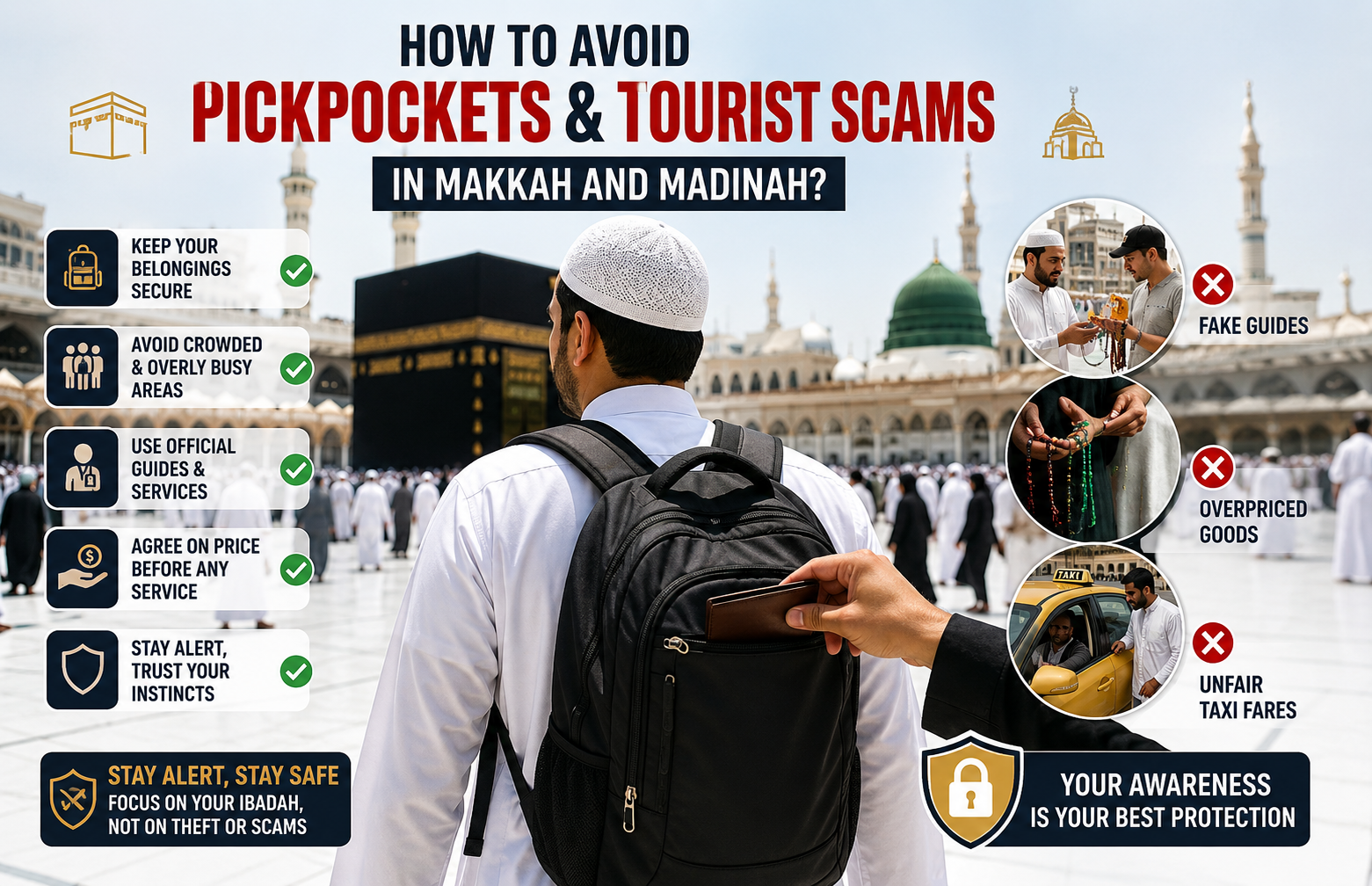
2. Fake Tour Guides
Some individuals offer unofficial guided tours of religious sites for inflated prices.
If you’d like a guided Ziyarat tour:
- Book through your Umrah travel agency.
- Use licensed operators.
- Confirm prices beforehand.
3. Taxi Overcharging
One of the most common issues faced by visitors is being charged more than the normal fare.
Protect yourself by:
- Using official taxis.
- Booking through ride-hailing apps.
- Confirming fares before departure where appropriate.
4. Fake Hotel Representatives
Occasionally, someone may approach arriving pilgrims claiming their hotel is full or closed and offering alternative accommodation. Always contact your hotel directly before accepting assistance. Never hand over your booking documents to strangers.
5. Currency Exchange Scams
Avoid exchanging money with individuals on the street.
Instead, use:
- Licensed exchange bureaux
- Banks
- Airport exchange counters
- Hotel exchange facilities (where available)
Always count your money before leaving the counter.
6. Counterfeit Goods
Markets near the Haram sell a wide range of products, including prayer mats, dates, perfumes, and Islamic gifts. If you’re purchasing branded items, be aware that counterfeit goods are sometimes sold. Buy from reputable retailers whenever possible.
7. “Free Gift” Scams
Someone may offer a free prayer bead, perfume sample, or souvenir before asking for payment. Politely decline if you’re not interested. Remember that genuine gifts don’t usually come with conditions.
How to Protect Your Money During Your Umrah?
Simple habits can significantly reduce your risk.
Carry only what you need
Take enough cash for the day and leave the rest securely locked in your hotel safe.
Separate your valuables
Avoid keeping:
- Passport
- Cash
- Credit cards
all together in one wallet. If one item is lost, you won’t lose everything.
Use a money belt
A concealed money belt or neck pouch is one of the safest ways to carry passports and emergency cash.
Keep emergency cash separately
Store a small reserve of money in a different location from your main wallet.
How to Keep Your Phone Safe During Umrah?
Smartphones are essential during Umrah for:
- Hotel bookings
- Maps
- Nusuk app
- Boarding passes
- Family communication
Protect your phone by:
- Avoiding loose pockets.
- Using a zipped bag.
- Holding it securely while taking photos.
- Avoiding unnecessary phone use in crowded areas.
Back up important documents digitally before travelling.
What are the Safety Tips for Families During Umrah?
Parents should take extra precautions. Before leaving your hotel each day:
- Photograph your children.
- Give older children your contact number.
- Use child ID bracelets.
- Agree on a meeting point.
- Keep children close in crowded areas.
You can also use the Nusuk app for family safety during Umrah. The app allows you to share your location with family members and set up alerts for when someone leaves a designated area.
What are the Safety Tips for Solo Travellers?
If travelling alone:
- Share your itinerary with family.
- Use official transport.
- Avoid isolated areas late at night.
- Keep your phone charged.
- Stay aware of your surroundings.
Solo female travellers should also consider using trusted ride-hailing apps for city travel.
What are the Hotel Safety Tips for Travellers in Makkah and Madinah?
When staying in your hotel:
- Lock valuables in the room safe.
- Don’t leave passports unattended.
- Confirm the identity of hotel staff before opening your door.
- Avoid sharing your room number publicly.
How to Shop Safely in Makkah and Madinah?
Shopping is part of many pilgrims’ experiences.
To shop safely:
- Compare prices before buying.
- Keep receipts.
- Avoid carrying large amounts of cash.
- Inspect products carefully.
- Be cautious when approached aggressively by salespeople.
What Should You Do If You’re Pickpocketed?
Although it’s upsetting, remain calm. If your belongings are stolen:
- Move to a safe location.
- Inform local authorities or security personnel.
- Contact your bank immediately if cards are missing.
- Report passport theft to your embassy or consulate.
- Notify your travel insurance provider if appropriate.
- Inform your Umrah tour operator.
Keeping digital copies of important documents makes replacement much easier.
Emergency Preparation Before Leaving the UK
Before travelling:
- Scan your passport.
- Save digital copies of your visa.
- Photograph your travel insurance policy.
- Store hotel details on your phone.
- Share your itinerary with family.
These simple steps can save valuable time if anything goes wrong.
What are the Common Safety Mistakes to Avoid?
Many first-time pilgrims unintentionally increase their risk.
Avoid:
- Carrying large amounts of cash.
- Leaving bags unattended.
- Keeping your wallet in your back pocket.
- Accepting help from strangers without verifying their identity.
- Using unofficial taxis.
- Exchanging money with street vendors.
- Ignoring your surroundings while using your phone.
Final Thoughts
Makkah and Madinah are among the most secure destinations for religious travellers, and millions of pilgrims complete their Umrah every year without encountering any problems.
By staying alert, using licensed services, protecting your valuables, and preparing for unexpected situations, you can greatly reduce the risk of theft or scams.
The purpose of your journey is to seek the pleasure of Allah (SWT), perform your acts of worship with sincerity, and experience the tranquillity of the holy cities. A little preparation before you travel allows you to focus on your pilgrimage with confidence and peace of mind.
FAQs
Is pickpocketing common during Umrah?
No. Most pilgrims never experience theft. However, because millions of people gather in one place, opportunistic pickpocketing can occasionally occur in crowded areas.
Is it safe to carry my passport?
It’s often best to keep your passport securely stored in your hotel safe unless you need it. Carry a photocopy if appropriate, but always follow local regulations regarding identification.
Are taxis safe?
Yes, especially official taxis and trusted ride-hailing services. Avoid accepting rides from unofficial drivers approaching you in public areas.
Can I use my phone safely around the Haram?
Yes, but remain aware of your surroundings and avoid leaving your phone unattended or loosely stored.
Should I buy travel insurance?
Absolutely. Comprehensive travel insurance can provide financial protection if your belongings are lost or stolen, as well as cover medical emergencies and travel disruption, subject to your policy terms.