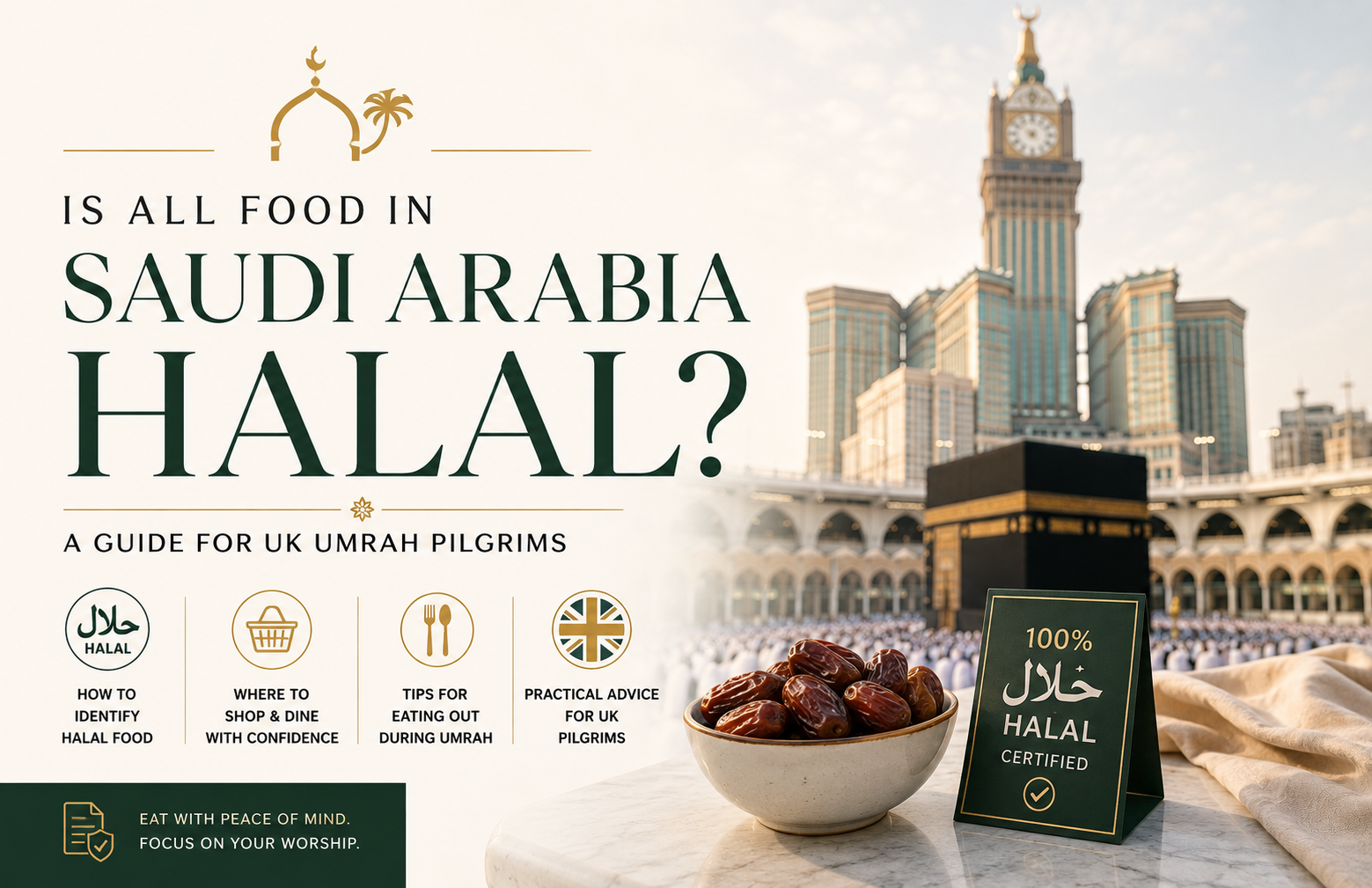
Yes, food in Saudi Arabia is halal by law. But there is more to it than that, and understanding the details will help you relax and enjoy your trip without second guessing every meal.
If you have grown up in the UK, checking whether food is halal is probably second nature by now. You look for a certificate on the wall, ask the waiter, or stick to restaurants you already trust. So when people say “don’t worry, everything in Saudi Arabia is halal,” it can feel a bit strange to just take that on faith, especially on a trip as important as Umrah.
Why is Saudi Arabia Different From the UK?
In the UK, halal food exists alongside everything else. A high street might have a halal butcher next to a pub, and you have to actively seek out halal options or check labels carefully. This is simply not how things work in Saudi Arabia.
Saudi law does not allow non-halal food to be sold commercially at all. That covers meat, restaurant meals, and packaged food on supermarket shelves. There is no separate halal aisle because the entire country’s food supply is built around this requirement from the start. You are not hunting for the halal option among several choices, because there is no non-halal option being sold in the first place.
This is a genuinely different experience from home, and it is one of the small comforts many pilgrims mention after their first few days in Makkah or Madinah. You stop reading every label and just eat.
Who Actually Checks This While Umrah?
The main body responsible for food safety and halal compliance in Saudi Arabia is the Saudi Food and Drug Authority, usually shortened to SFDA. Alongside it, the Saudi Standards, Metrology and Quality Organisation sets the technical halal standards that food producers and importers must follow.
For meat and poultry specifically, every shipment coming into the country needs a halal certificate, and that certificate has to come from a body that SFDA actually recognises. This applies to local producers as well as anything imported from abroad. Since late 2023, this requirement has expanded beyond just raw meat to cover a much wider range of products, including things like sauces, pastries, chocolate, dietary supplements, and ready meals that contain any meat, animal fat, gelatin, or other animal derived ingredients.
In simple terms, if a product with any animal based ingredient wants to be sold in Saudi Arabia, someone along the supply chain has already had to prove it is halal before it reaches a shelf or a restaurant kitchen.
What This Means for Alcohol?
One thing that often surprises first time visitors from the UK is just how total the alcohol ban is. In Britain, you might specifically ask if a dish is cooked with wine or if a dessert contains rum, since these things do show up even in places that otherwise serve halal meat.
In Saudi Arabia, alcohol is banned outright, in restaurants, hotels, and shops. It is not a case of asking the waiter to leave it out. It simply is not part of the food or drink culture at any level. For UK pilgrims used to double checking sauces, marinades, and desserts back home, this is one less thing to worry about entirely.
Where People Get Confused?
Even though the law is strict and clear, there are a few areas where pilgrims, especially those used to the UK’s halal certification system, sometimes have questions.
Stunning before slaughter. In the UK, some halal consumers specifically look for meat that comes from animals that were not stunned before slaughter, since this is a point of difference between various halal certification bodies back home. Saudi Arabia’s own regulations have gone back and forth on stunning requirements for imported poultry over the years, and standards can differ between local and imported meat. If this is something you personally care about, it is worth knowing that Saudi halal certification does not necessarily match the exact standard you might follow with a specific UK certifier like HMC or HFA. For most pilgrims this distinction does not change anything about their trip, but if it matters to you personally, it is worth being aware that “halal” in Saudi Arabia is defined by Saudi religious and regulatory authorities, not by UK based certification bodies.
Imported branded products. Saudi Arabia is home to millions of expatriate workers from South Asia, the Philippines, Egypt, and elsewhere, and supermarkets like Lulu and Tamimi stock a large amount of imported packaged food to serve them. These products go through SFDA registration and import review, so they are generally considered safe to buy. That said, for very specific concerns, like a particular additive or E number in an unfamiliar imported snack, individual sourcing details are not always something you can trace back yourself while standing in a supermarket aisle. This is a minor point rather than something to be anxious about, but it explains why some long term expats in Saudi Arabia still read labels out of habit.
Cross contamination. Because non-halal food cannot be commercially sold in the country at all, the usual worry about a halal dish being cooked on the same grill as a non-halal one simply does not apply the way it might at a restaurant in the UK that serves both. This is one of the genuine advantages of eating in Saudi Arabia as opposed to eating out back home.
Practical Advice for UK Pilgrims
Given all this, here is how most pilgrims from the UK approach food once they arrive.
You do not need to ask “is this halal” at restaurants, since the entire menu already is. This alone removes a habit many of us have carried our whole lives, and it can honestly take a day or two to stop doing it out of instinct.
You can eat freely from international fast food chains too. Places like Al Baik, KFC, Burger King, and Hardee’s operate under the same Saudi halal requirements as any local restaurant, so there is no need to treat them with suspicion the way you might treat an unfamiliar takeaway back home.
If you do have a specific personal requirement, such as strictly wanting non-stunned meat, it is worth mentioning this to your hotel or asking directly at a restaurant, since standards can vary slightly between suppliers even within a halal by law country.
For packaged snacks or imported goods from supermarkets, buying well known, established brands is generally the safer choice if you want extra peace of mind, simply because they tend to have clearer supply chains and more consistent import documentation.
Hotel Buffets and Vanilla Extract
One question that sometimes comes up, mostly from pilgrims who have read about this online rather than experienced it themselves, is whether hotel buffets or bakery items could contain trace alcohol, the kind you sometimes find in vanilla extract or certain flavourings back in the UK. Because Saudi Arabia bans alcohol at every level of the supply chain, food manufacturers and hotel kitchens are not using alcohol based extracts the way some producers in Europe do. This is another example of the legal ban doing the work for you, rather than something you need to personally screen for at breakfast.
A Quick Checklist Before You Go
If you want a simple mental checklist to settle any lingering worries before your trip, here it is.
- Restaurants and hotels: fully halal by law, no need to ask.
- Fast food chains: same rules apply, eat freely.
- Alcohol: not sold or used in cooking anywhere in the country.
Imported packaged snacks are generally fine; stick to well known brands if you want extra reassurance.
Specific dietary preferences like non-stunned meat: worth asking directly if it genuinely matters to you, since this sits outside the general legal guarantee.
A Simple Way to Think About It
The clearest way to sum this up for a UK pilgrim is this. Back home, halal is something you actively look for. In Saudi Arabia, non-halal is something that legally cannot be sold to you in the first place. That is a genuine shift, and once it clicks, it removes a huge amount of the low level mental effort that usually comes with eating out.
There will always be a small number of personal preference questions, particularly around stunning methods or specific imported products, that go slightly beyond the general legal guarantee. But for the overwhelming majority of pilgrims, food in Saudi Arabia is one part of the trip you genuinely do not need to worry about. Focus your energy on your worship, your prayers, and your time at the Haram, and let the food be one less thing on your mind.