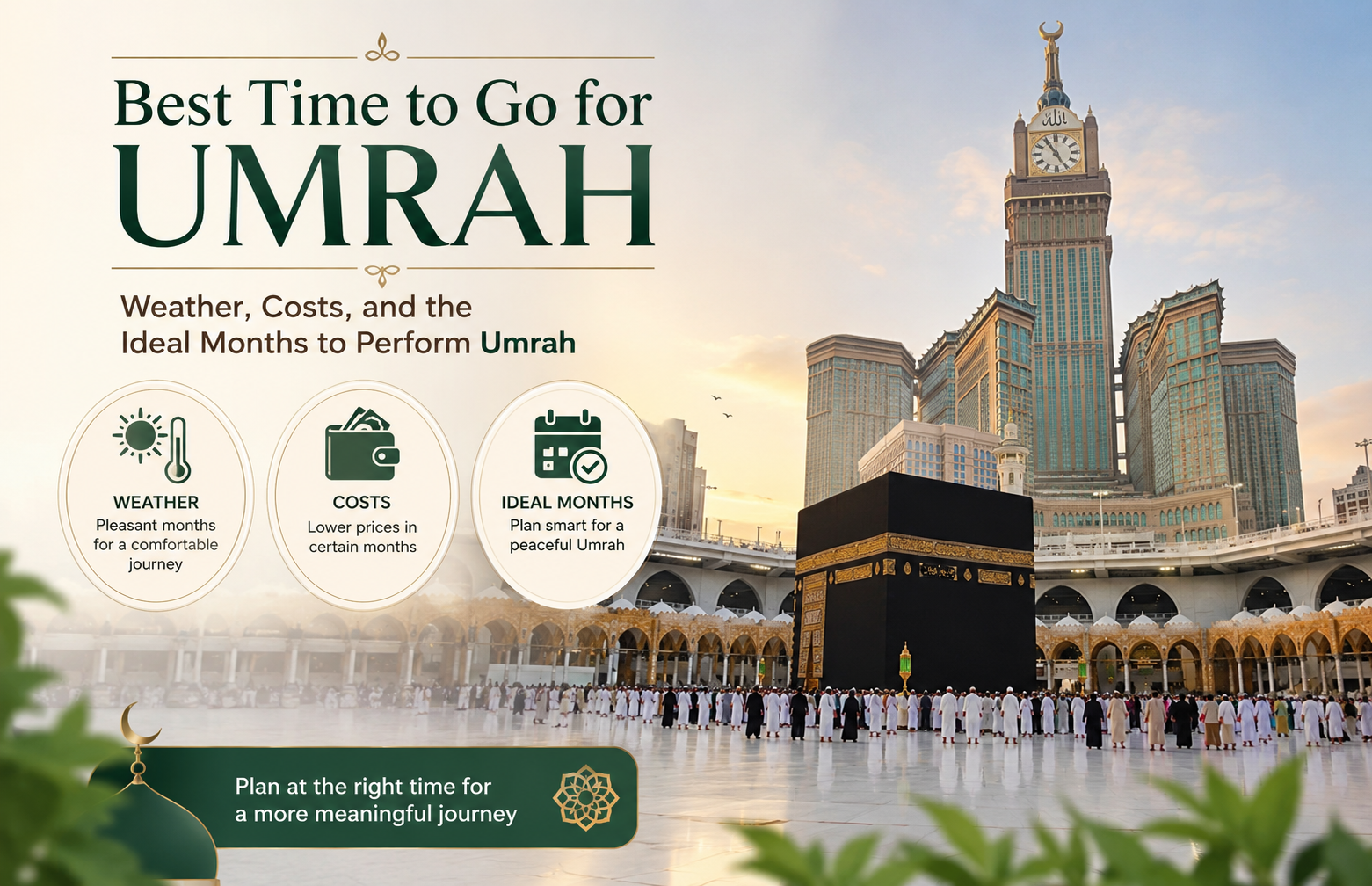
Umrah is not tied to fixed dates the way Hajj is. You can go almost any time of the year, which is one of the small mercies of this pilgrimage. But that freedom also means you have to think about timing yourself, and the month you pick can change your trip more than people expect. It affects how hot you’ll feel walking to the Haram, how long you’ll wait for space during Tawaf, and how much your flights and hotel end up costing.
This guide breaks down the year by weather, cost, and crowd levels, so you can pick a time that actually suits you rather than just going whenever it happens to fit your calendar.
Weather Through the Year in Saudi Arabia
Here’s what you can generally expect from the weather during the summer months:
Summer, June to August
This is the hardest time of year to perform Umrah physically. Temperatures in Makkah and Madinah regularly climb past 40 degrees, sometimes touching 45 or higher during the peak of the afternoon. Walking any real distance outdoors during the day becomes genuinely tough, and it’s particularly hard on elderly pilgrims, young children, or anyone with health conditions that make heat difficult to manage.
If summer is the only time that works for you, it’s still doable. Just plan around the heat rather than against it. Early morning and late night are far more manageable than midday, and staying close to the Haram matters more than usual so you’re not walking long distances under the sun.
Autumn, September to November
This period offers a real sweet spot. The extreme heat of summer starts easing off, especially by October and November, while the crowds are usually lighter than winter or Ramadan. October in particular often gets singled out as one of the most balanced months of the year, since the weather is comfortable without the price spikes that come with UK school holidays or Ramadan.
Winter, December to February
This is generally considered the most physically comfortable time to go. Daytime temperatures tend to sit in a much more manageable range, and nights can actually feel cool, sometimes even needing a light jacket in Madinah. January and February are frequently mentioned as the most pleasant months of the year for walking, praying, and generally being outdoors without discomfort.
The catch is that winter is popular for exactly this reason. Hotels fill up quickly, and prices rise noticeably around December, particularly close to UK school holidays and the New Year period.
Spring, March to May
Spring starts comfortably, especially through March, but by April and May the heat begins building back up. Depending on where Ramadan falls in a given year, part of spring may overlap with it too, since the Islamic calendar shifts earlier by about ten days each year. Worth checking the specific dates for the year you’re planning, since spring’s character changes a lot depending on that overlap.
| Season | Months | Typical Temperature |
| Summer | June-August | 30–45°C |
| Autumn | September-November | 25–40°C |
| Winter | December-February | 15–30°C |
| Spring | March-May | 20–38°C |
Cost Through the Year of Umrah
Cost and weather don’t always move together, so it’s worth looking at them separately.
The most expensive periods are almost always Ramadan and the weeks around Hajj. During Ramadan, demand for flights, hotels, and even everyday food and transport goes up sharply, since millions of Muslims specifically choose this month for its spiritual reward. Hajj season carries its own price spike too, even though Umrah itself isn’t performed during the actual days of Hajj.
School holiday periods also push prices up, particularly for pilgrims travelling from the UK. Christmas and New Year, Easter, and the summer holidays all see a jump in demand from families travelling with children, which pushes hotel and flight prices higher even outside of Ramadan.
The cheapest months tend to be the ones right after Hajj season, particularly the Islamic months of Muharram and Safar. Demand drops noticeably during this period, and prices can fall by a significant margin compared to peak season, sometimes by thirty to fifty per cent on the same routes and hotels. April and September also tend to offer decent value, sitting outside both Ramadan and the main UK school holiday windows.
Crowd Levels During the Year of Umrah
Crowds affect your experience at the Haram more than most people expect before their first trip. A quiet Tawaf where you can move at your own pace feels completely different from a packed one where you’re constantly shuffling forward in a tight crowd.
Ramadan brings the heaviest crowds of the year by far, especially in the final ten nights, when millions of additional pilgrims arrive specifically for that period. Hajj season naturally brings huge numbers too, even outside the fixed Hajj days themselves, since many pilgrims extend their trip before or after.
The quietest period tends to be right after Hajj, during Muharram and Safar, when the crowds from Hajj have gone home and Ramadan is still months away. Many experienced pilgrims specifically time their Umrah for this window, since it combines lower prices with a genuinely calmer atmosphere for worship.
Ramadan: A Special Case
Ramadan deserves its own mention, since so many Muslims plan around it despite the crowds and cost. Performing Umrah during Ramadan carries a level of spiritual reward that some hadiths describe as equal to Hajj, which is a huge draw for pilgrims who want to combine fasting, Taraweeh prayers, and Umrah into one deeply meaningful trip.
If this reward matters more to you than comfort or cost, Ramadan is absolutely worth choosing despite the crowds. Just go in with realistic expectations. Hotels near the Haram book out early, prices climb well above normal, and Tawaf during the final ten nights in particular can involve significant waiting and crowding. Many pilgrims still say it was worth it, but it helps to know what you’re signing up for rather than being caught off guard.
Why Timing Matters More Than People Think?
Saudi Arabia has a proper desert climate, which means the difference between visiting in summer and visiting in winter is not small. It is the difference between a comfortable walk to the mosque and a walk that leaves you drained before you’ve even started your rituals. On top of that, prices for flights and hotels shift a lot depending on the season, sometimes by hundreds of pounds for the same trip just a few weeks apart.
None of this is a reason to delay your Umrah if you’re ready to go. But if you have flexibility, understanding these patterns helps you get more comfort and value out of the same trip.
When to Book, Regardless of When You Travel
Whatever month you choose, booking early tends to pay off. Flights and hotels near the Haram get snapped up fastest for winter and Ramadan, but even quieter months like Muharram and Safar see prices creep up as the date gets closer, simply because more pilgrims have caught on to how good the value is during that window.
A rough rule that works well for most pilgrims is to book at least two to three months ahead for regular months, and closer to four to six months ahead if you’re specifically targeting Ramadan or the December school holidays. Waiting until the last few weeks before travel almost always means paying more and having fewer choices, especially for hotels within easy walking distance of the Haram in either city.
So What’s the Ideal Time for Umrah?
If your main priority is comfort, aim for winter, particularly January or February, or the shoulder months of October and November when the heat has eased but prices haven’t spiked yet.
If your main priority is saving money, target Muharram and Safar, right after Hajj season, when both prices and crowds drop noticeably compared to the rest of the year.
If your main priority is spiritual reward above everything else, Ramadan is unmatched, even with the higher cost and crowds that come with it.
If you’re travelling with children and tied to UK school holidays, May half term often offers better value than Easter or summer, and early December can work out cheaper than the last two weeks of the month when the main school break begins.
Final Thought
There’s no single month that’s objectively best for everyone, because what matters most differs from one pilgrim to the next. Someone travelling with elderly parents will weigh things very differently from someone chasing the specific reward of Ramadan, or a student trying to travel cheaply during a quiet university break. Look honestly at your own priorities, whether that’s weather, budget, crowd levels, or spiritual timing, and let that guide your decision rather than just picking whatever month happens to be convenient. Whenever you go, the intention behind the journey matters far more than the date on the calendar.