
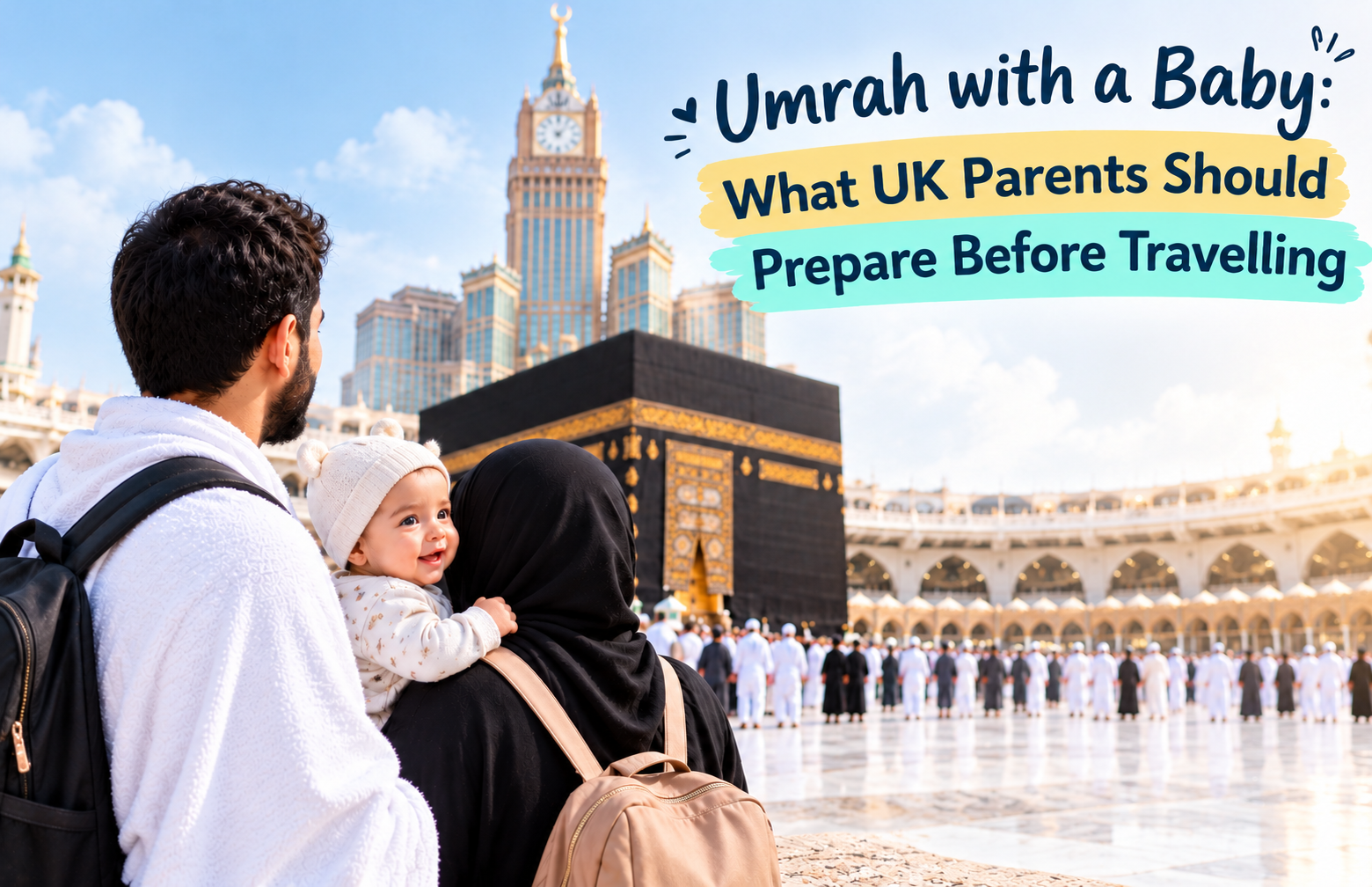
Taking a baby on Umrah is entirely possible, and many UK families do it every year. It does take more planning than a solo trip. You will be managing feeds, naps, nappies and heat, alongside long flights, crowded mosques and physically demanding rituals. The more you prepare before you leave, the more peaceful and spiritually rewarding your journey will be.
This guide covers what UK parents should sort out before travelling: paperwork, health, timing, packing, accommodation and how to approach the rituals with a little one.
Is Umrah with a Baby a Good Idea?
There is no single right answer. Some parents find that babies who are small and still sleep a lot are easier to carry and settle, while a mobile toddler can be more tiring. Whatever the age, babies are more sensitive to heat, dehydration, infections and disrupted routines than adults.
Ask yourself a few honest questions:
- Is my baby healthy and feeding well?
- Do I have help from a partner, relative or friend who can share childcare?
- Can we be flexible if we need to rest instead of completing every ritual in one day?
- Are we comfortable with the climate, the crowds and the distance from medical care we know?
If the answer to most of these is yes, and your GP or health visitor has no concerns, you can start planning with confidence.
Step 1: Sort the Paperwork Early
The step one includes sorting the paperwork early:
Passport and visa
Your baby needs their own passport and their own visa. A UK child passport can take several weeks to arrive, so apply as soon as you decide to go, and check that it will have the validity Saudi Arabia requires. Applications for children usually need a passport photo, the child’s passport, and sometimes proof of the relationship to the parents, such as a birth certificate. Requirements can vary depending on whether you book through a licensed operator, through the Nusuk platform or independently, so check the latest rules on the official Saudi channels and with your operator.
Booking and protection
UK government advice encourages pilgrims to research their travel company before booking and to make sure it is ATOL protected. Check that your baby is included on your booking, flights and room allocation, and ask what the operator’s policy is on infant fares, cots and family rooms.
Travel insurance
Take out travel insurance that covers every member of the family, including the baby, and check that Umrah is not excluded. Read the cover for medical treatment abroad, repatriation, lost luggage and cancellations. Keep the policy number and emergency helpline saved offline on your phone.
Step 2: Talk to Your GP or Travel Clinic
Saudi Arabia’s Ministry of Health publishes health requirements for pilgrims each year, and they can change. The UK’s TravelHealthPro service advises pilgrims to seek pre-travel health advice from a health professional or travel clinic ideally four to six weeks before travel, and to check the official requirements before they go.
For babies, this matters even more. Some vaccines are only suitable from certain ages, and your baby may be too young for some of them. A doctor or travel nurse can tell you what is required, what is recommended and what to do if your baby is too young for a particular vaccine. Ask them about:
- Which vaccines are needed for your baby’s age, and whether any exemption letters are required
- Routine UK vaccinations and whether the schedule should be adjusted
- How to prevent and recognise dehydration, heat exhaustion and gastroenteric illness
- Medicines to pack, including paracetamol or ibuprofen if appropriate for your baby’s age, and how to dose them
- Any existing health conditions and what to do if symptoms appear abroad
Carry copies of prescriptions and any medical documents, and keep medicines in their original packaging in your hand luggage.
Step 3: Choose Your Travel Dates Carefully
Timing makes a huge difference with a baby. Summer in Makkah and Madinah can be extremely hot, and the Haram is at its busiest during Ramadan, school holidays and the weeks around Hajj. If you can, travel in a cooler, quieter period, even if it means taking a few days off during term time.
Plan the trip around your baby’s routine:
- Choose flights that fit naps and bedtimes as far as possible
- Allow a rest day after arrival before starting Umrah
- Avoid squeezing too many activities into a short stay
- Build in extra days in case the baby is unwell
Step 4: Pick the Right Accommodation
With a baby, the hotel is your sanctuary. Location is the most important factor. A hotel close to the Haram reduces the distance you have to walk in the heat and makes it easier to return to your room for feeds, naps and changes. Many families find that paying a little more for a closer hotel is worth it.
Before you book, ask the hotel about:
- Cots, high chairs and baby baths
- Rooms with a fridge or kettle for preparing bottles
- Family rooms rather than separate rooms for parents and children
- Air conditioning that works reliably
- Laundry services
If your package splits families across rooms, raise this early and ask for a room you can share with your baby.
Step 5: Pack Smart
Packing for a baby on Umrah is a balancing act. You want to bring enough, but you also have to carry it. Supermarkets near the Haram stock nappies, formula and baby food, so you can buy some items on arrival. Even so, bring familiar brands of anything your baby is sensitive to.
Essentials to pack
- Nappies, wipes, nappy cream and changing mat
- Formula, bottles and sterilising equipment if needed, plus extra for delays
- Baby food pouches or snacks if your baby has started solids
- Lightweight, breathable clothes and a sun hat
- Baby sunscreen suitable for their age and a thermometer
- Oral rehydration sachets, teething gel and any prescribed medicine
- A muslin cloth, a small blanket for air conditioning, and spare clothes for you
- A comfortable baby carrier or sling
- A foldable, lightweight pushchair for use between the hotel and the mosque
- Your baby’s comforter or favourite toy
Whether pushchairs are permitted inside certain areas of the mosques depends on the area and the time, and rules can change, so ask your operator and follow the instructions of the staff on site. Many parents rely on a carrier for the busiest parts, which keeps both hands free and the baby close.
Pack a small, accessible day bag with the items you need most, and keep it with you at all times. Write your name, phone number and hotel on a card and place it in the bag.
Step 6: Plan the Flight
Long flights are one of the hardest parts of the trip. Contact your airline in advance to ask about infant fares, baggage allowances, bassinets and meal options. Ask for seats that suit a family with a baby. Feed your baby during take-off and landing to help with ear pressure, and bring spare clothes in case of spills.
Allow extra time at airports for security, passport control and nappy changes. If you have a stopover, check the transit rules and how long you will need to wait.
Step 7: Plan the Rituals Around Your Baby
Umrah involves tawaf, sa’i and, for men, shaving or trimming hair, and for women trimming a small amount. With a baby, flexibility is key. Many scholars and experienced pilgrims advise parents to speak with a knowledgeable teacher about practical questions before they travel, such as what to do if you need to stop to feed or change your baby.
Some practical suggestions:
- Visit the Haram during quieter times of day, such as after the night prayers or in the early morning, depending on the season
- Take turns with your partner so one parent can rest with the baby while the other performs the rites, if your plan allows
- Use a carrier during tawaf so your hands are free and the baby feels secure
- Bring water and take breaks as you need them
- Keep your baby shaded and cool, and watch for signs of overheating such as flushed skin or unusual drowsiness
- Use the designated areas for women and families when you need to feed or change your baby, and ask staff where to find them
Plenty of families also use child identification wristbands, which can help officials reunite you quickly if you are separated.
Step 8: Staying Connected and Safe
Crowds can make it easy to lose track of each other. Agree a meeting point and a plan with your partner before entering the mosque. Keep your phones charged and consider a local SIM or eSIM for data. Share your live location with a family member, and save the numbers of your tour leader, hotel and insurer.
Keep your baby’s passport and documents in a secure pouch, and carry photocopies and digital copies separately. If you need urgent medical attention, ask your hotel or operator to direct you to the nearest clinic or hospital, and call the Saudi emergency number if it is serious.
Step 9: Look After Yourselves Too
Parents often put themselves last, but you will be a better carer if you rest and eat well. Drink plenty of water, wear comfortable shoes and sleep when your baby sleeps. Do not be afraid to ask relatives or group members for help. Remember that caring for your child with patience and love is itself an act of worship.
If you cannot complete everything exactly as planned, do not be discouraged. Umrah is about intention and sincerity, and seeking knowledge and advice about any concessions that apply to your situation is part of doing it properly.
Final Thoughts
Umrah with a baby asks more of you but it can also be one of the most memorable journeys your family ever takes. With the right documents, health advice, accommodation and packing you can focus on worship and enjoy the journey together. Start early, stay flexible, and take things one step at a time.


