
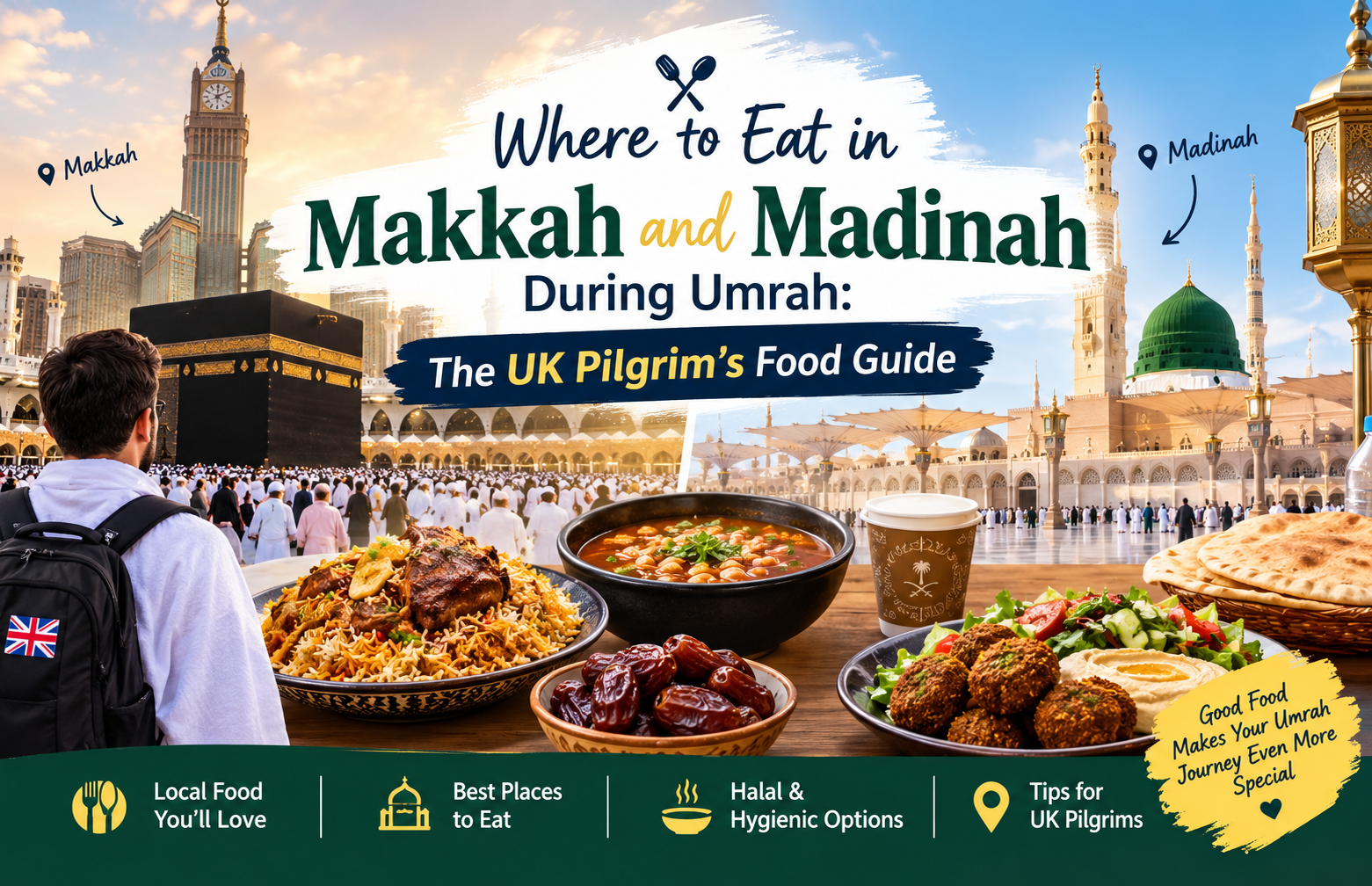
Food is not the main purpose of Umrah but it shapes your trip more than you might expect. After a long day of worship, walking and waiting in the heat then a good meal can restore your energy and lift your mood. A bad one or no meal at all also can leave you tired and unwell.
The good news is that Makkah and Madinah are two of the easiest cities in the world for halal food. Everything on the menu is halal food options range from quick snacks to full family feasts, and you will find something to suit almost every taste and budget. This guide gives UK pilgrims a practical overview of what to eat, where to look, how to stay healthy and how to save money.
What to Expect from Food in Makkah and Madinah
Both cities serve pilgrims from every corner of the world. You will find Saudi and Arab dishes alongside Pakistani, Indian, Turkish, Egyptian, Levantine and Southeast Asian cooking. In the areas closest to the holy mosques, restaurants are used to feeding large groups quickly, and many staff speak English, Urdu or Arabic.
Opening hours also revolve around prayer times. Some outlets close briefly during the congregational prayers and many stay open late into the night. Plan your meals around the adhan and avoid arriving at the busiest times right after the prayers.
Restaurants and menus change often, and branches open and close so treat the names below as starting points and check recent reviews or ask your hotel for current recommendations.
Eating in Makkah
Makkah offers a wide range of dining options from hotel buffets to international chains and local Saudi restaurants. So pilgrims can eat conveniently around prayer times.
Hotel buffets and food courts
Most pilgrims eat at least some meals in their hotel. Many packages include breakfast and some include dinner. Buffets are convenient, reliable and good for large families, though quality varies from hotel to hotel.
If you are staying near the Haram, the Abraj Al Bait (Clock Tower) complex has a large food court with a mix of fast-food counters and sit-down restaurants at mid-range prices. It is handy when you need to eat between prayers without stepping into street traffic. Expect grilled chicken and kebabs served with rice such as kabsa, mandi, Bukhari and biryani, as well as shawarma, fresh juices and international fast food. Other towers and shopping areas around Jabal Omar also have food courts and restaurants.
Al Baik, Saudi Arabia’s favourite fast food
Many pilgrims describe a meal at Al Baik as a rite of passage. This much-loved Saudi chain is known for its crispy broasted chicken, nuggets, sandwiches and shrimp meals and it is popular with locals as well as visitors. Branches are spread across central Makkah including near Ajyad Street. Some tower complexes do not have a branch inside but delivery services may bring Al Baik to your hotel. Expect queues at peak times.
Other reliable chains
If you want something quick also familiar and affordable so look for Al Tazaj, a Saudi favourite known for flame-roasted chicken that feels lighter than fried food and Herfy and Kudu, which sell burgers, sandwiches and meals. International fast-food brands are also available around the central areas.
Traditional Saudi and Arabian dishes
One of the best ways to feel the local culture is to try a traditional meal. Mandi, a slow-cooked, tender lamb or chicken served over fragrant rice, is the dish many pilgrims remember most. Restaurants such as Al Romansiah are often recommended for lamb mandi after Umrah. Kabsa, a spiced rice dish, is another staple, usually served in large platters meant for sharing, which makes it ideal for families and groups.
Food from home
UK pilgrims who miss South Asian flavours will find plenty of biryani, karahi, nihari, daal and fresh naan. Several restaurants around Jabal Omar and Ajyad Street serve subcontinental dishes, and Pakistani, Indian and Bangladeshi cafes are common in the more budget-friendly neighbourhoods such as Aziziah and Misfalah. These areas can be further from the Haram, so check the transport options.
Desserts, coffee and sweet treats
Dessert shops and cafes are everywhere. You will find ice cream, baklava, kunafa and Arabic sweets, along with specialty coffee shops and chains that are popular with pilgrims. Some dessert chains attract long queues in the evenings. Arabic coffee with dates is also offered as a sign of hospitality in many hotels and homes.
Eating in Madinah
Madinah is calmer than Makkah, and many pilgrims describe its food scene as more relaxed and welcoming. The streets around Masjid an-Nabawi have restaurants, cafes, bakeries and supermarkets, so you rarely have to walk far.
Mandi and kabsa
Mandi and kabsa restaurants are the backbone of group dining in Madinah. Large platters make it easy to feed a family or tour group without spending a lot. Look for busy places with a high turnover of customers, which is usually a sign of fresh food.
Turkish and international options
Madinah has a strong Turkish presence, and you will find pide, kebabs and lentil soup on many menus. Restaurants run by or catering to pilgrims from Europe and Turkey are also popular with British visitors. Fast-food chains such as Al Baik, Herfy and others have branches close to the mosque, along with cafes and ice cream shops.
A Hijazi breakfast
Try a traditional Hijazi breakfast at least once. Look for dishes such as foul (stewed fava beans), falafel, fresh bread, eggs and sweet tea. It is filling, cheap and typical of the region.
Dates and souvenirs
No trip to Madinah is complete without dates. The Ajwa date is especially valued by Muslims, and you will find many varieties in shops and markets around the mosque. Compare prices, ask to taste before buying, and be wary of overpriced shops very close to the mosque. Dates also make excellent gifts for family and friends in the UK, though check your airline’s baggage rules and UK customs guidance for food you bring home.
Supermarkets and Budget Eating
Eating out every meal can add up. Supermarkets near the Haram area in both cities stock water, fruit, bread, yoghurt, snacks and baby food, and they are a cheaper option for breakfast or a light dinner. Well-known supermarket chains such as BinDawood and Al Raya are common in the central areas. Street stalls and small canteens sell sandwiches, shawarma, samosas and rice dishes at low prices.
To save money:
- Eat your main meal at lunch when many places offer set meals
- Share large platters between two or three people
- Fill a refillable bottle with water instead of buying bottles each time
- Ask for prices before ordering if there is no menu
- Avoid restaurants with the very highest rent, such as those directly next to the mosque entrances, if you are on a tight budget
Zamzam Water and Eating Inside the Haram
Zamzam water is available for free in the mosques and is one of the most blessed parts of any visit. Drink it often, especially in hot weather. Dates and Arabic coffee are also commonly shared at the mosques, and during Ramadan, volunteers and charities offer free iftar meals. If you take part, be respectful of the rules, avoid leaving rubbish and follow instructions from mosque staff.
Eating inside prayer areas is restricted in some places, so follow the signs and staff guidance, and keep any snacks you carry discreet and clean.
Staying Healthy While You Eat
Stomach upsets are one of the most common problems among travellers, and they can ruin your Umrah if you are not careful. Follow a few simple rules:
- Wash or sanitise your hands before eating
- Choose busy restaurants where food is cooked fresh and served hot
- Be cautious with raw salads, cut fruit and ice if you are unsure of the source
- Drink plenty of water, especially in warm weather, and take oral rehydration sachets in case of illness
- Eat regularly, even if you are busy, to keep your energy up
- Avoid trying too many new, rich or spicy foods at once
If you have a food allergy, intolerance or medical condition such as diabetes, plan carefully. Carry a card in Arabic and English explaining your needs, ask staff about ingredients, and bring your medication and snacks. Speak to your GP or travel clinic before you go.
Eating with Children and Elderly Relatives
Families often find that children prefer familiar foods such as chicken nuggets, rice, bread and fruit. Fast-food chains and supermarkets make this easy. Older relatives may prefer lighter, softer meals, and may need to follow dietary advice from their doctor. Hotel buffets can be a convenient option because they offer variety and let people choose what suits them.
Avoid keeping children waiting hungry. Carry small snacks and water in your day bag, especially for long walks or long waits around prayer times.
Delivery and Late-Night Food
Many restaurants in Saudi Arabia work with local delivery apps, and hotels often have room service or can help you order. Delivery can be a lifesaver after a long day or when you want to rest, though availability and delivery fees depend on your location. If you plan to use delivery apps, a local data plan or eSIM will help, and your hotel can advise which services work in your area.
Practical Tips for UK Pilgrims
Eating well in Makkah is straightforward once you know where to look and how to plan around prayer times. A few simple habits can help you save money, avoid crowds and keep the holy sites clean.
- Carry some cash and a card. Most places accept cards, but small shops and stalls may prefer cash.
- Know your prayer times. Eat earlier or later than the rush that follows congregational prayers.
- Ask your guide or hotel. They know which places are clean, fairly priced and close to your route.
- Check reviews. Recent online reviews help you spot restaurants that have declined or improved.
- Be mindful of waste. Take only what you can eat and share leftovers where appropriate.
- Respect the environment. Dispose of rubbish properly around the holy sites.
Final Thoughts
Good food can make your Umrah more comfortable and memorable. Start with simple, reliable meals, try one or two traditional dishes, and look after your health and budget along the way. Whether you enjoy a plate of mandi in Madinah, a box of crispy chicken after tawaf or a quiet hotel breakfast, remember that nourishing your body helps you focus on worship.


