Shab-e-Barat is one of the most talked-about nights in the Islamic calendar. Every year, Muslims around the world welcome the 15th night of Sha’ban with prayers, reflection, and a renewed focus on their relationship with Allah. For many Muslim families in the UK, this night is a special opportunity to pause from daily routines, seek forgiveness, and prepare spiritually for the blessed month of Ramadan.
Although different Muslim communities may observe Shab-e-Barat in different ways, the central message remains the same: turning towards Allah with sincerity, repentance, and hope in His mercy. It is a night that encourages believers to reflect on their actions, strengthen their faith, and make positive changes in their lives.
In this article, we will explore the importance of Shab-e-Barat, its significance in Islam, the virtues associated with this night, and how Muslims can make the most of it.
What Is Shab-e-Barat?
The term “Shab-e-Barat” comes from Persian and Urdu. “Shab” means night, while “Barat” refers to deliverance, salvation, or freedom. In Arabic, this night is commonly referred to as Laylat al-Nisf min Sha’ban, meaning the Night of the Middle of Sha’ban.
It falls on the night between the 14th and 15th of Sha’ban, the eighth month of the Islamic calendar. Across many Muslim communities, this night is viewed as a time for seeking Allah’s forgiveness and mercy.
For generations, Muslims have spent this night in worship by offering voluntary prayers, reciting the Holy Qur’an, making dua, and remembering Allah. It serves as a reminder that Allah’s mercy is vast and that sincere repentance can bring a person closer to Him.
Why Is Shab-e-Barat Important?
The importance of Shab-e-Barat lies in the opportunity it provides for spiritual renewal. Life often becomes busy with work, family responsibilities, studies, and daily commitments. As a result, many people unintentionally drift away from regular acts of worship.
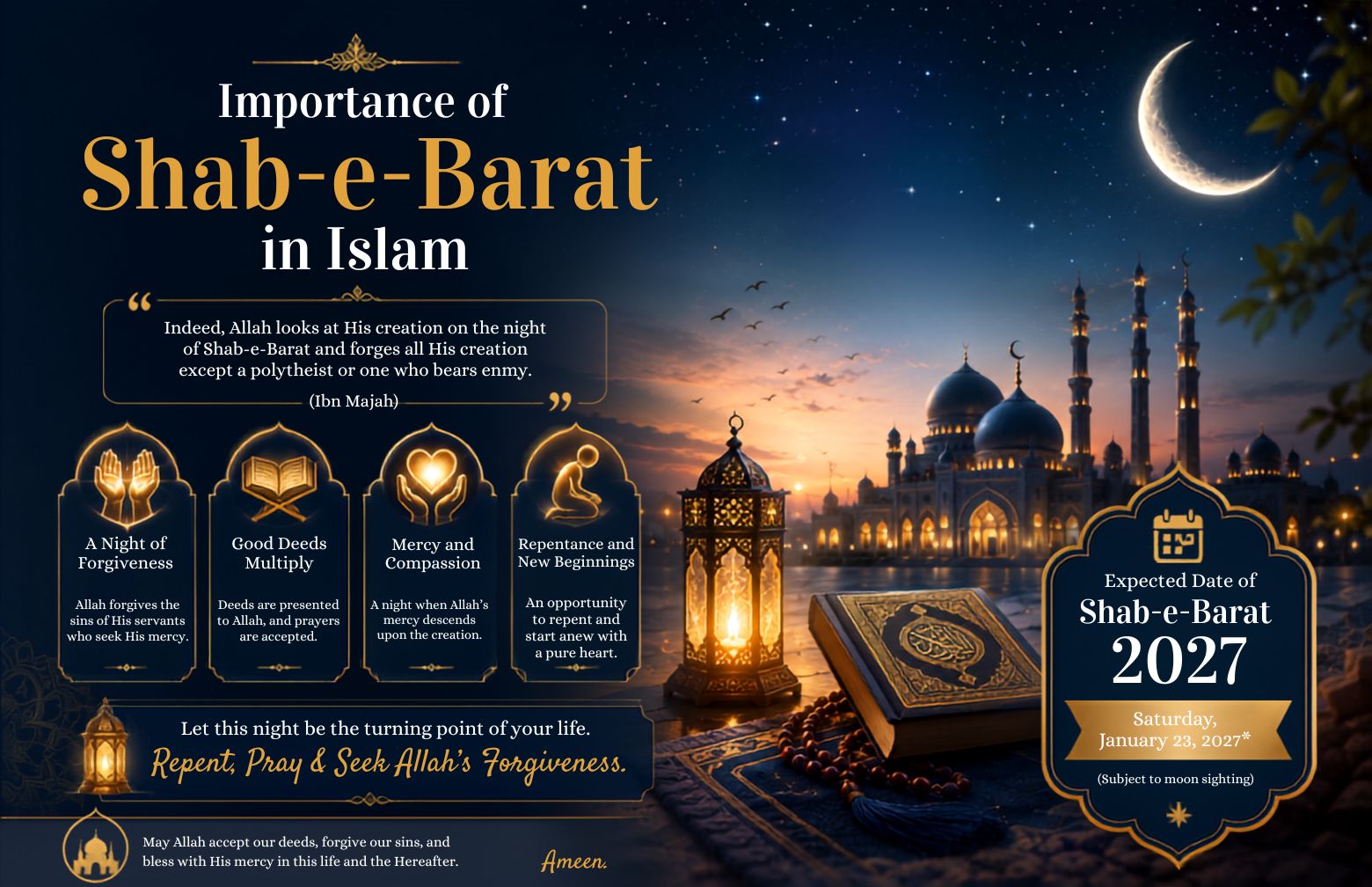
Shab-e-Barat encourages Muslims to reconnect with their Creator. It is a chance to seek forgiveness for past mistakes and ask Allah for guidance in the future. The night reminds believers that no matter how many sins a person has committed, Allah’s mercy remains greater.
This message of hope is especially meaningful for Muslims who may be struggling with personal challenges, regrets, or spiritual weaknesses. The night inspires believers to start fresh and move forward with renewed faith.
The Mercy of Allah on This Night
One of the most frequently mentioned virtues associated with the middle night of Sha’ban is Allah’s immense mercy.
Several narrations mention that Allah looks upon His creation on this night and forgives many of His servants, except those who persist in certain major sins such as associating partners with Allah or holding deep hatred and resentment towards others.
These narrations highlight two important lessons:
First, Muslims should strengthen their relationship with Allah by maintaining pure belief and sincere worship.
Second, they should improve their relationships with people around them. Islam places great importance on forgiveness, reconciliation, and maintaining family ties. Shab-e-Barat serves as a reminder to let go of grudges and seek peace with others whenever possible.
A Time for Self-Reflection on Shab-e-Barat
One of the most beautiful aspects of Shab-e-Barat is the opportunity for self-reflection.
Many people spend much of the year focused on worldly matters. While earning a living and caring for family are important, Islam also encourages regular reflection on one’s spiritual condition.
During Shab-e-Barat, Muslims are encouraged to ask themselves important questions:
- Am I fulfilling my obligations towards Allah?
- Have I wronged anyone?
- Do I need to seek forgiveness?
- Am I preparing myself for Ramadan?
- What changes can I make to become a better Muslim?
Taking time to reflect honestly can help a person identify areas for improvement and make meaningful changes before Ramadan arrives.
Preparing for Ramadan After Shab-e-Barat
One of the reasons Shab-e-Barat holds special significance is its position in the Islamic calendar. It comes just a few weeks before Ramadan.
The month of Sha’ban itself was valued by the Prophet Muhammad ﷺ. It was a month in which he increased voluntary acts of worship and fasting.
Shab-e-Barat can therefore be viewed as a spiritual checkpoint before Ramadan. It provides an opportunity to:
- Increase prayer and remembrance of Allah
- Develop a stronger connection with the Qur’an
- Make sincere repentance
- Set spiritual goals for Ramadan
- Strengthen good habits before fasting begins
Those who use this night wisely often find themselves entering Ramadan with a more focused and prepared mindset.
The Importance of Seeking Forgiveness on This Night
Seeking forgiveness is one of the main themes associated with Shab-e-Barat.
Every human being makes mistakes. Islam does not expect perfection, but it encourages sincere repentance. Allah repeatedly invites His servants to turn back to Him and seek forgiveness.
On this blessed night, many Muslims dedicate extra time to making dua and asking Allah to forgive their sins. They seek forgiveness for mistakes they remember and those they may have forgotten.
True repentance involves:
- Recognising one’s mistakes
- Feeling genuine regret
- Asking Allah for forgiveness
- Intending not to repeat the sin
- Making amends where possible
The beauty of Islam is that Allah’s door of mercy remains open. No matter how far a person may feel from Allah, sincere repentance can bring them closer again.
Recommended Acts of Worship for Shab-e-Barat
While there is no specific compulsory ritual prescribed for Shab-e-Barat, many Muslims spend the night engaged in beneficial acts of worship.
Voluntary Prayers
Offering additional prayers allows believers to spend quiet moments communicating with Allah. Many people pray Tahajjud and other voluntary prayers during the night.
Recitation of the Qur’an
Reading and reflecting on the Qur’an helps strengthen faith and provides spiritual comfort. Even a small amount recited with understanding can have a profound impact.
Making Dua
Dua is one of the most powerful acts of worship. Muslims use this night to ask Allah for forgiveness, guidance, good health, protection, and success in both this life and the Hereafter.
Dhikr
Remembering Allah through phrases such as SubhanAllah, Alhamdulillah, Allahu Akbar, and Astaghfirullah helps keep the heart connected to its Creator.
Sending Salawat Upon the Prophet ﷺ
Sending blessings upon the Prophet Muhammad ﷺ is a beloved act of worship that carries great rewards and strengthens a believer’s love for the Messenger of Allah.
Remembering the Hereafter as a Lesson
Another lesson associated with Shab-e-Barat is remembering the temporary nature of worldly life.
Islam teaches that every soul will eventually return to Allah. Reflecting on death and the Hereafter is not intended to create fear alone; rather, it encourages believers to live purposeful lives.
When Muslims remember that life is temporary, they are more likely to:
- Value their time wisely
- Improve their character
- Prioritise worship
- Seek forgiveness regularly
- Strengthen family relationships
This reflection helps create a balanced perspective on life and encourages sincere devotion to Allah.
Family and Community Connections on Spiritual Journey
For many Muslims in the UK, Shab-e-Barat is also a time when families come together in worship and remembrance.
Parents often teach children about the significance of the night and encourage them to participate in prayer and dua. Mosques may hold gatherings that focus on Islamic reminders, Qur’an recitation, and spiritual preparation for Ramadan.
These activities help strengthen community bonds and create opportunities for learning and spiritual growth.
However, it is important that any practices remain within the teachings of Islam and are carried out with sincerity and moderation.
Common Misunderstandings About Shab-e-Barat
As with many religious occasions, different cultural traditions have developed around Shab-e-Barat.
While cultural customs may vary from one community to another, Muslims should always ensure that their focus remains on authentic Islamic teachings. The purpose of the night is not elaborate celebrations but rather worship, reflection, repentance, and seeking Allah’s mercy.
The greatest benefit comes from sincere devotion rather than outward displays.
Lessons Muslims Can Learn from Shab-e-Barat
Shab-e-Barat offers several valuable lessons that remain relevant throughout the year.
Allah’s Mercy Is Endless
No matter how many mistakes a person has made, Allah’s mercy is greater. This night reminds believers never to lose hope.
Repentance Should Be Continuous
Seeking forgiveness should not be limited to one night. Muslims should make repentance a regular part of their daily lives.
Relationships Matter
Islam encourages believers to avoid hatred, jealousy, and disputes. Maintaining good relationships with others is an important aspect of faith.
Preparation Leads to Success
Using Sha’ban wisely helps Muslims enter Ramadan with stronger faith and better spiritual habits.
Worship Brings Inner Peace
Acts of worship provide comfort, guidance, and a sense of closeness to Allah that cannot be found elsewhere.
How Can UK Muslims Make the Most of Shab-e-Barat?
Living in a busy environment can sometimes make it difficult to dedicate long hours to worship. However, even small efforts can be meaningful.
UK Muslims can benefit from Shab-e-Barat by:
- Setting aside time for sincere dua
- Reading a portion of the Qur’an
- Performing voluntary prayers
- Seeking forgiveness from Allah
- Reconciling with family or friends if needed
- Planning spiritual goals for Ramadan
- Encouraging children to learn about the significance of the night
The key is sincerity rather than quantity. Even a short period of worship performed with a sincere heart can be immensely rewarding.
When Is Shab-e-Barat Expected in 2027?
Shab-e-Barat is expected to fall on the evening of 22 January 2027, with the 15th of Sha’ban likely corresponding to 23 January 2027. However, as the Islamic calendar is based on moon sightings, the exact date may vary by one day depending on local moon observations in the UK and other countries.
Muslims are encouraged to check announcements from their local mosque or Islamic organisation closer to the date for confirmation. Regardless of the exact day, the night remains a valuable opportunity to seek Allah’s forgiveness, increase worship, and prepare spiritually for the upcoming month of Ramadan.
Final Thoughts
The importance of Shab-e-Barat lies in its powerful reminder of Allah’s mercy, forgiveness, and the opportunity for spiritual renewal. It encourages Muslims to reflect on their lives, seek repentance, strengthen relationships, and prepare their hearts for Ramadan.
For Muslims across the UK and around the world, this blessed night serves as a valuable opportunity to reconnect with Allah and renew their commitment to faith. By spending the night in prayer, remembrance, Qur’an recitation, and sincere dua, believers can draw closer to their Creator and seek His infinite mercy.
Most importantly, Shab-e-Barat reminds us that no matter where we are in our spiritual journey, the door to Allah’s forgiveness is always open for those who turn to Him with sincerity and hope.