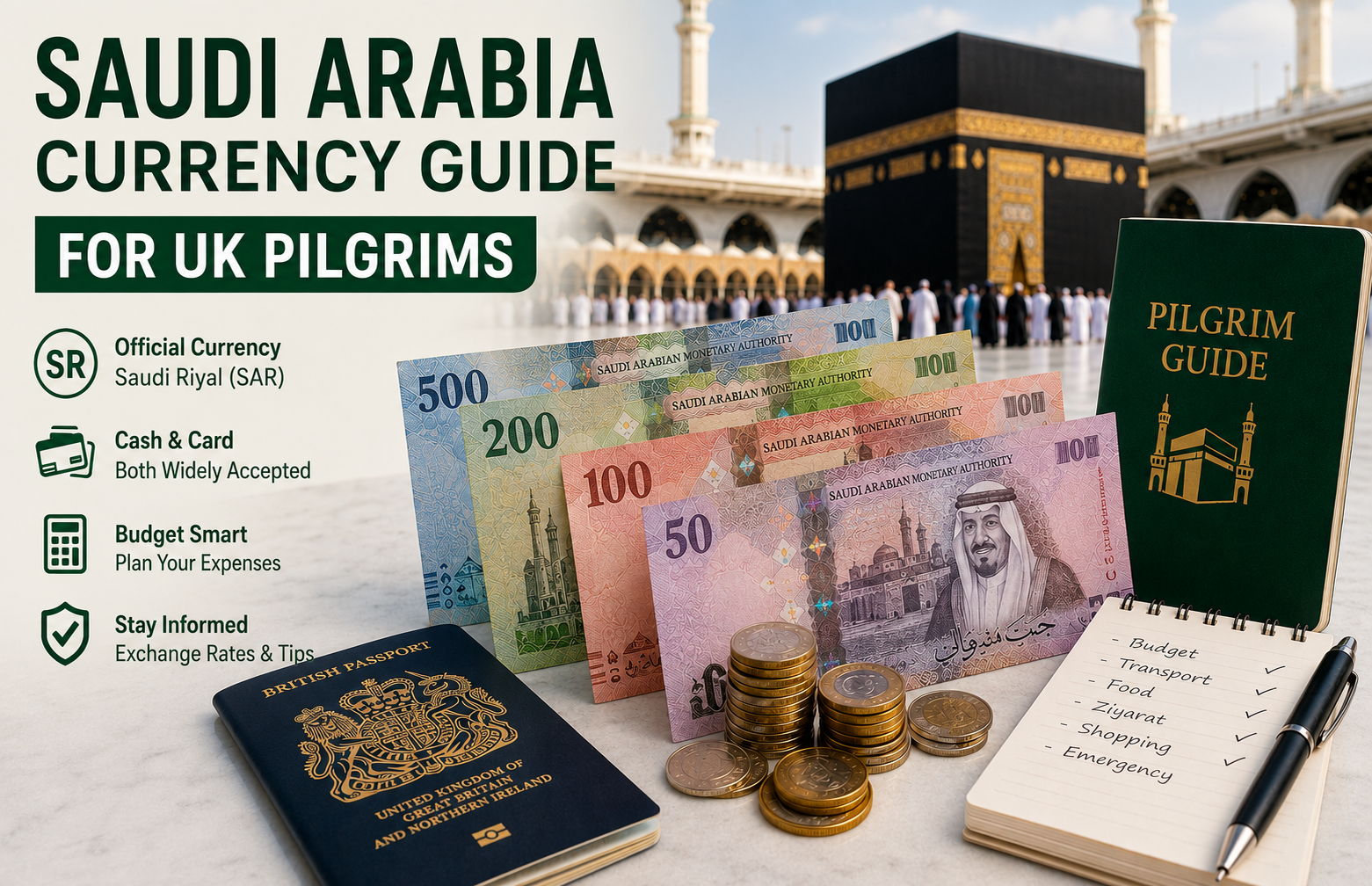
So if you’re travelling to Saudi Arabia for your first Umrah or you’re a returning pilgrim, understanding the local currency is an essential part of planning your journey. For instance from paying for taxis and meals to shopping for gifts and exchanging money, knowing how the Saudi Riyal works can save you time, money, and unnecessary stress.
Many UK pilgrims ask questions like:
- Should I exchange money before leaving the UK?
- Can I use my debit or credit card in Saudi Arabia?
- Is cash still necessary?
- How much spending money should I take?
This guide answers these questions and provides practical money tips to help you manage your finances confidently during your Umrah.
What Is the Currency of Saudi Arabia?
The official currency of Saudi Arabia is the Saudi Riyal, commonly abbreviated as SAR.
You’ll often see prices displayed as:
- SAR
- SR
- ر.س (Arabic abbreviation)
All three refer to the same currency. The Saudi Riyal is issued by the Saudi Central Bank (SAMA) and is used throughout the Kingdom, including Makkah and Madinah.
What are the Different Denominations of the Saudi Riyal?
Understanding the available notes and coins will make everyday transactions easier.
Banknotes
Saudi Riyal notes are available in:
- 1 SAR
- 5 SAR
- 10 SAR
- 50 SAR
- 100 SAR
- 200 SAR
- 500 SAR
The 200 SAR note may not always be widely circulated, so don’t be surprised if you rarely receive one.
Coins
Coins commonly include:
- 1 Halala
- 5 Halalas
- 10 Halalas
- 25 Halalas
- 50 Halalas
- 1 Riyal
- 2 Riyals
100 Halalas = 1 Saudi Riyal
Although coins exist, many day-to-day purchases are rounded to the nearest Riyal.
Should You Exchange Money Before Leaving the UK?
It’s a good idea to exchange a small amount of Saudi Riyals before you travel.
Having cash ready means you can pay for:
- Airport snacks
- Taxis
- Small purchases
- Tips
- Unexpected expenses
However, you don’t necessarily need to exchange all your spending money in the UK. Many pilgrims prefer to exchange additional funds after arriving or use bank cards for larger purchases.
Can You Exchange Money in Saudi Arabia?
Yes. Currency exchange services are widely available in:
- Jeddah
- Makkah
- Madinah
- Airports
- Shopping centres
- Exchange bureaux
Compare exchange rates before converting large amounts, as rates and service fees can vary.
Should You Bring Cash or Use Cards?
For most UK pilgrims, carrying both cash and bank cards is the best approach.
Cash is useful for:
- Small restaurants
- Street vendors
- Local shops
- Taxis (where card payments aren’t available)
- Small donations
- Tips
Cards are convenient for:
- Hotels
- Shopping malls
- Larger restaurants
- Supermarkets
- Pharmacies
- Most major retailers
Having both payment options gives you flexibility throughout your trip.
Are Debit and Credit Cards Accepted?
Yes. Visa and Mastercard are widely accepted across Saudi Arabia, especially in larger businesses. Many hotels, restaurants, supermarkets, and shopping centres accept contactless payments.
Before travelling, inform your bank that you’ll be visiting Saudi Arabia to help prevent your card from being temporarily blocked due to unusual overseas activity.
Also check whether your bank charges foreign transaction fees.
Can You Withdraw Cash from ATMs?
Yes. ATMs are easy to find throughout:
- Makkah
- Madinah
- Airports
- Shopping malls
- Hotels
Most UK debit and credit cards work at Saudi ATMs, although your bank may charge international withdrawal fees.
If possible, withdraw larger amounts less frequently to reduce transaction charges.
How Much Spending Money Should You Take?
Your budget depends on your travel style and whether your Umrah package includes meals and transport.
Typical daily spending may include:
- Meals and drinks
- Coffee or refreshments
- Taxi fares
- Shopping
- Souvenirs
- Charity donations
If your flights, accommodation, and transfers are already included in your package, your daily spending money may only need to cover personal expenses.
Families should budget more for food, snacks, and children’s essentials.
Common Costs During Umrah Pilgrimage
While prices vary depending on location and season, here are some common expenses you may encounter:
- Bottled water
- Coffee and tea
- Restaurant meals
- Taxi fares
- Snacks
- Gifts and souvenirs
- Dates
- Prayer mats
- Islamic books
- Perfume
- Zamzam containers (where permitted)
Prices near Masjid al-Haram may be higher than those in other parts of the city.
Is Tipping Expected in Saudi Arabia?
Tipping is not mandatory, but it is appreciated for good service.
You may choose to tip:
- Hotel staff
- Taxi drivers
- Porters
- Restaurant staff
- Tour guides
Small amounts are generally considered appropriate. Always tip voluntarily rather than feeling obliged.
Should You Carry Large Amounts of Cash?
No. It’s safer to:
- Carry only what you need for the day.
- Leave extra cash in your hotel safe.
- Separate your money into different places.
- Avoid displaying large amounts of cash in public.
Using cards for larger purchases can also reduce the amount of cash you need to carry.
Money-Saving Tips for UK Pilgrims
Travelling wisely can help your budget go further.
Compare Exchange Rates
Don’t accept the first exchange rate you see. Compare rates from UK providers and Saudi exchange bureaux before converting large sums.
Avoid Airport Currency Exchanges for Large Amounts
Airport exchange counters are convenient but may offer less competitive rates than city exchange services. Exchange only enough for immediate expenses if necessary.
Check Bank Charges
Some UK banks charge:
- Foreign transaction fees
- ATM withdrawal fees
- Currency conversion charges
Knowing these costs before travelling can help you choose the most economical payment method.
Use Contactless Payments Where Possible
Many businesses in Saudi Arabia accept contactless payments, making transactions quick and secure.
Keep Emergency Cash
Carry a small reserve of cash separately in case your bank card is lost or temporarily unavailable.
Safety Tips for Carrying Money
Protecting your money is just as important as managing it. Here are some practical tips:
- Use a secure money belt or neck pouch.
- Avoid counting cash in busy public areas.
- Keep cards in RFID-protected wallets if possible.
- Store emergency cash separately from your main wallet.
- Save your bank’s emergency contact number.
These simple precautions can help reduce stress during your pilgrimage. Plus make sure to avoid scams and be aware of pickpockets.
Should You Exchange Leftover Riyals Before Returning Home?
If you have a significant amount of Saudi Riyals left at the end of your trip, you may wish to exchange them before leaving Saudi Arabia or after returning to the UK.
Some travellers keep a small amount for future visits, especially if they plan to perform Umrah again.
Common Mistakes to Avoid as a First-Time Pilgrim to Makkah and Madinah
Many first-time pilgrims make avoidable money mistakes.
These include:
- Exchanging all their money at the airport.
- Carrying too much cash.
- Forgetting to notify their bank before travelling.
- Relying on only one payment method.
- Ignoring foreign transaction fees.
- Not keeping emergency cash.
Planning ahead helps avoid unnecessary inconvenience.
Final Thoughts
Managing your money doesn’t have to be complicated during Umrah. By understanding the Saudi Riyal, carrying a combination of cash and cards, checking exchange rates, and planning your daily budget, you can avoid unnecessary financial stress and focus on your spiritual journey.
Before leaving the UK, notify your bank of your travel plans, exchange a small amount of Saudi Riyals, and familiarise yourself with local payment methods. These simple preparations can make your experience in Makkah and Madinah much smoother.
FAQs
Can I use British Pounds in Saudi Arabia?
No. Shops, restaurants, and taxis generally accept payments in Saudi Riyals (SAR). Exchange your Pounds before making purchases.
Is cash still necessary?
Yes. Although card payments are widely accepted, cash remains useful for taxis, small shops, local cafés, and tips.
Can I use my UK debit card?
Yes. Most UK Visa and Mastercard debit cards work in Saudi Arabia, but check with your bank about overseas usage and fees before travelling.
Are ATMs easy to find?
Yes. ATMs are widely available in Makkah, Madinah, airports, shopping centres, and commercial areas.
How much emergency cash should I carry?
This depends on your personal circumstances, but carrying enough cash for a day’s expenses and unexpected situations is generally sensible.